
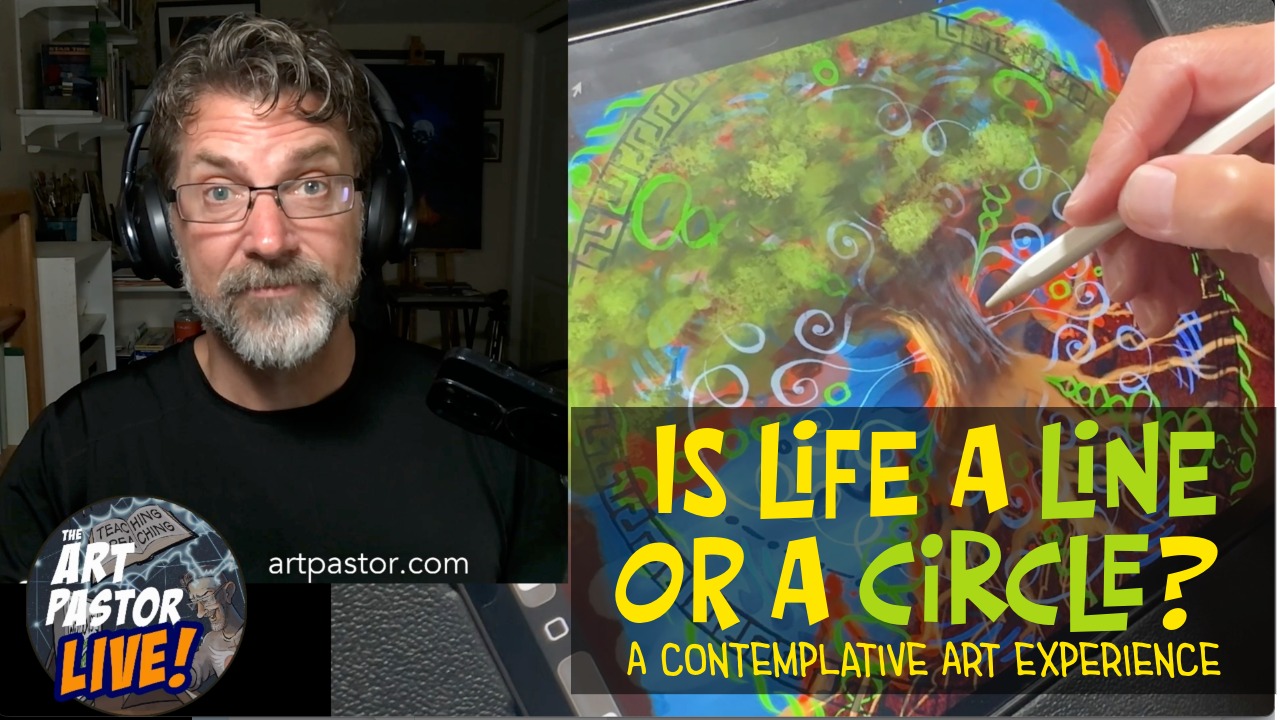
What if the way you measure your spiritual growth is based on a flawed concept of time?
In our fast-paced, modern culture, we are subtly trained to view life as a straight line. We draw charts, track metrics, and calculate progress on an upward, left-to-right slope. We treat spiritual formation like a ladder: you start at the bottom as a struggling novice and climb toward efficiency, agency, and spiritual perfection.
But when Jesus talks about the Kingdom of Heaven, he rarely uses the language of industrial progress or linear ladders. Instead, he talks about seeds quietly dying in dirt, yeast permeating dough, nets cast into mysterious depths, and tiny mustard grains expanding into sheltering trees.
In this Art Pastor Live session, we explored Matthew 13 alongside reflections on how different cultures understand time. By pairing Jesus’ parables with visual art, we paused to ask a fundamental question: Is life a line or a circle—and how does the Kingdom of God grow within us?
On Thursday, July 16 at 4:00pm CT I livestreamed on YouTube and Facebook for an hour. This contemplative session reflects Jesus’ parables in Matthew 13 and my thoughts about discipleship and how we perceive time in different cultures.
The art is created in the Procreate app on my iPad Pro.
Enjoy!
walking through the session…
Part 1: The Anatomy of Matthew 13
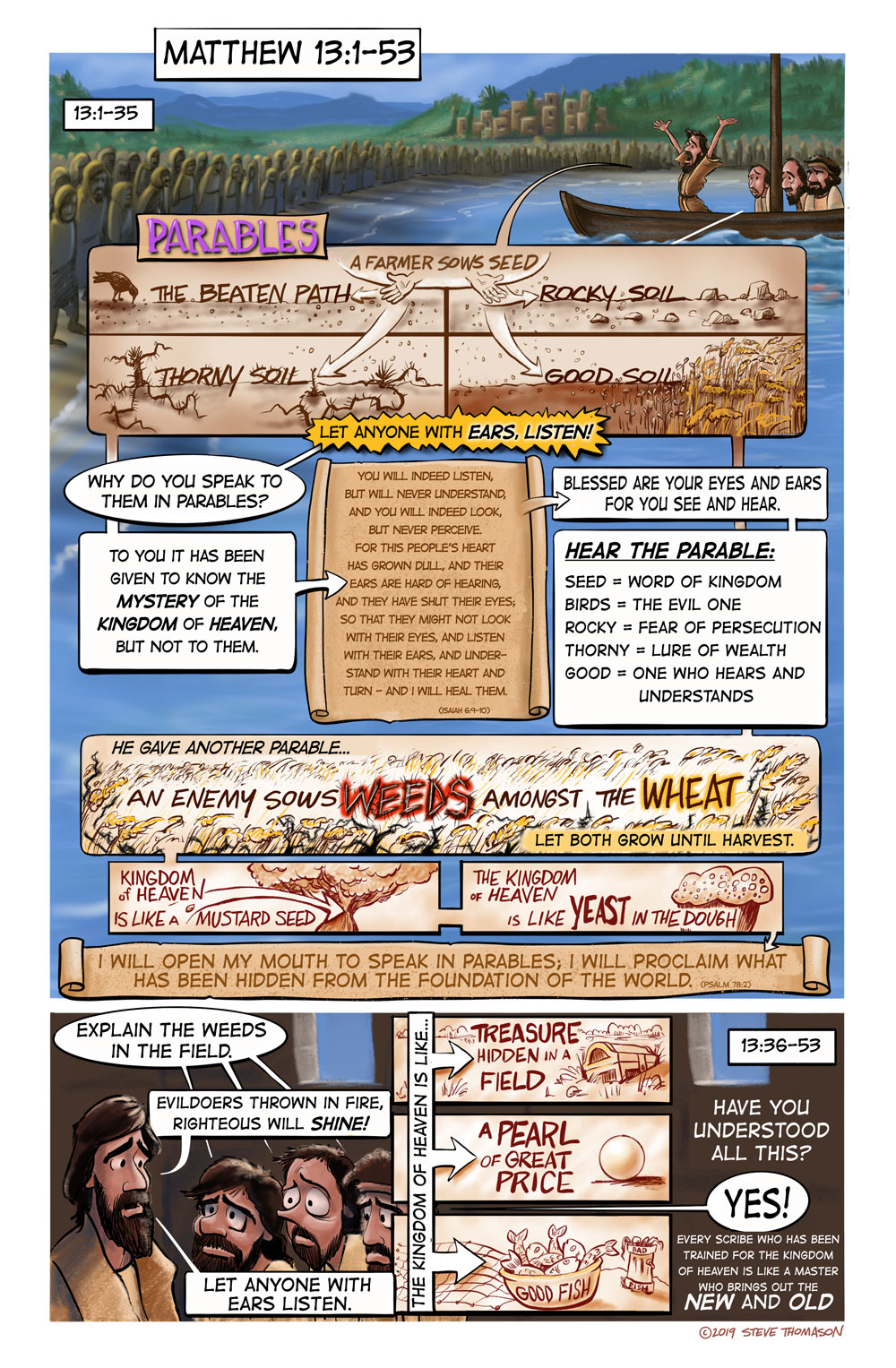
Matthew chapter 13 serves as the structural heart of Jesus’ Galilean ministry. Pressed by overwhelming crowds on the shores of Capernaum, Jesus steps into a fishing boat, sits down, and addresses the beach using parables.
Matthew carefully structures seven parables in this chapter, organizing them into a distinct movement between public proclamation and private reflection:
The Public Parables: Subversive and Organic
Speaking from the boat, Jesus describes the Kingdom through organic, slow-moving processes:
- The Sower (Matt 13:1–23): Grace is scattered lavishly everywhere—on paths, rocks, thorns, and good soil. The outcome depends on the depth and condition of the receiving environment.
- The Weeds and the Wheat (Matt 13:24–30): Good seed and unwanted weeds grow side by side in the same field. When servants ask to pull the weeds, the owner stops them. Root systems interlock; premature judgment risks destroying the good wheat.
- The Mustard Seed & The Yeast (Matt 13:31–33): The Kingdom begins imperceptibly small. Yet, like yeast folding through flour or a mustard seed rising over a garden, its ultimate impact is expansive and transformative.
When asked why he speaks in parables, Jesus quotes Isaiah 6, noting that parables are meant to bypass superficial intellectual defenses. Parables do not function like concise theological textbooks; they are mystery-laden conversation starters designed to make hungry souls lean in and ask deeper questions.
The Private Parables: Ultimate Value
Moving away from the beach into the privacy of a home, Jesus offers three additional parables to his inner circle:
- The Hidden Treasure & The Pearl of Great Price (Matt 13:44–46): Upon realizing the incredible value of the Kingdom, a person joyfully releases everything else to possess it.
- The Net (Matt 13:47–50): A dragnet gathers fish of every kind, leaving the final sorting to the end of the age.
Notice the beautiful bookends formed by the Weeds/Wheat and the Net. Both parables protect us from a toxic religious tendency: becoming “weed inspectors.” Jesus reminds us that sifting, evaluating, and final judgment belong strictly to God and God’s angels. Our job is not to police the field, but simply to sink our roots deep into grace and bear good fruit.
Part 2: Linear Progress vs. Cyclical Rhythms
How do we cultivate this kingdom fruit over time?
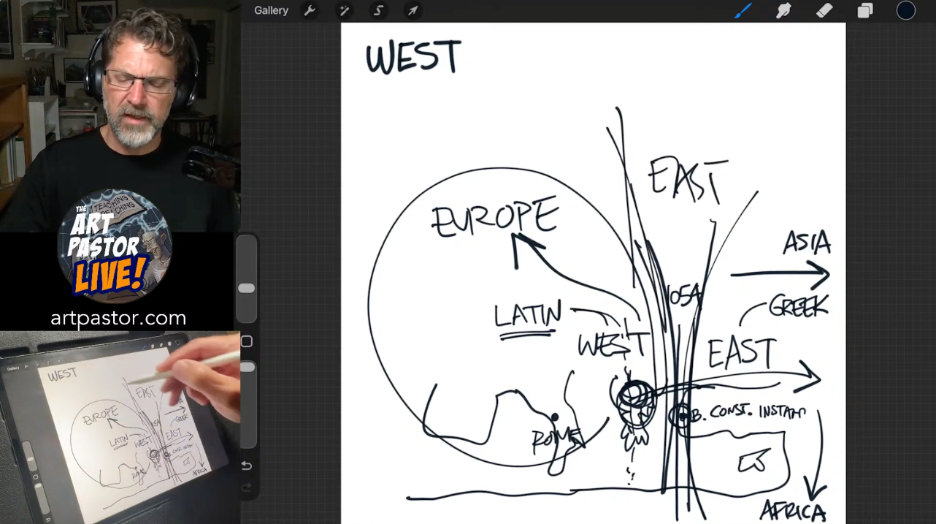
In her book Our Unforming: Deconstructing Western Formation and Reclaiming Spiritual Rhythms, spiritual director Dr. Cindy S. Lee points out that modern Western Christianity has largely adopted a linear, Enlightenment-driven worldview. Tracing back to Aristotelian logic and Western industrialism, this view posits that life moves along a straight trajectory from left to right, bottom to top:
When we bring this linear metric to our faith, we create immense spiritual anxiety. We expect constant, measurable improvement. When we experience grief, spiritual dryness, doubt, or failure, we assume we have “regressed” or failed.
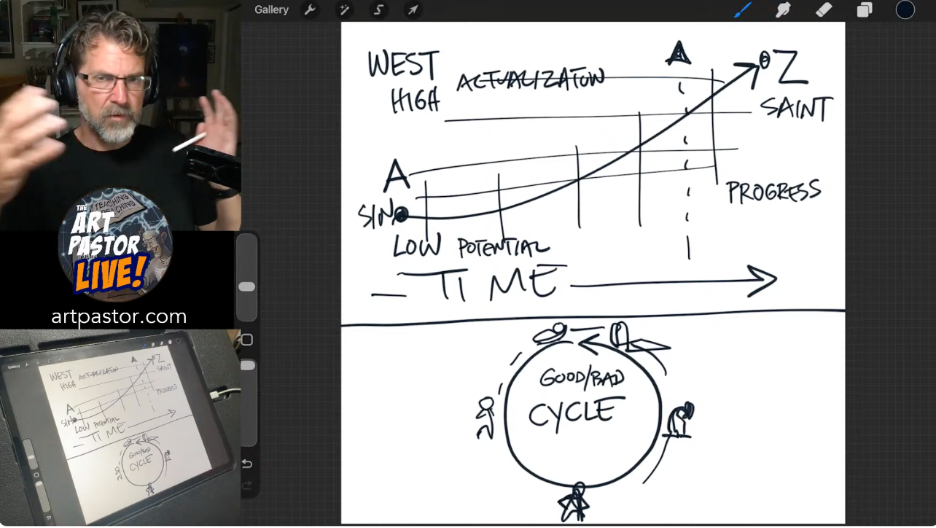
However, as Lee notes, many Global Majority, Indigenous, and Asian cultural traditions experience time not as a linear highway, but as a series of rhythms, seasons, and cycles.
In nature, time moves in circles. Spring yields to summer, summer declines into autumn, autumn surrenders to the death of winter, and winter quietly prepares the soil for a new spring. A tree does not produce fruit 365 days a year. It goes through long, invisible periods of dormancy where vitality is drawn entirely underground.
When we free spiritual formation from the modern myth of linear progress, we realize that times of loss, rest, unlearning, and waiting are not signs of spiritual regression. They are essential seasons in the organic cycle of grace.
Part 3: The Canvas—Visualizing the Tension
During the live stream, I opened Procreate on my iPad to visually meditate on these colliding worldviews.
- The Rigid Grid
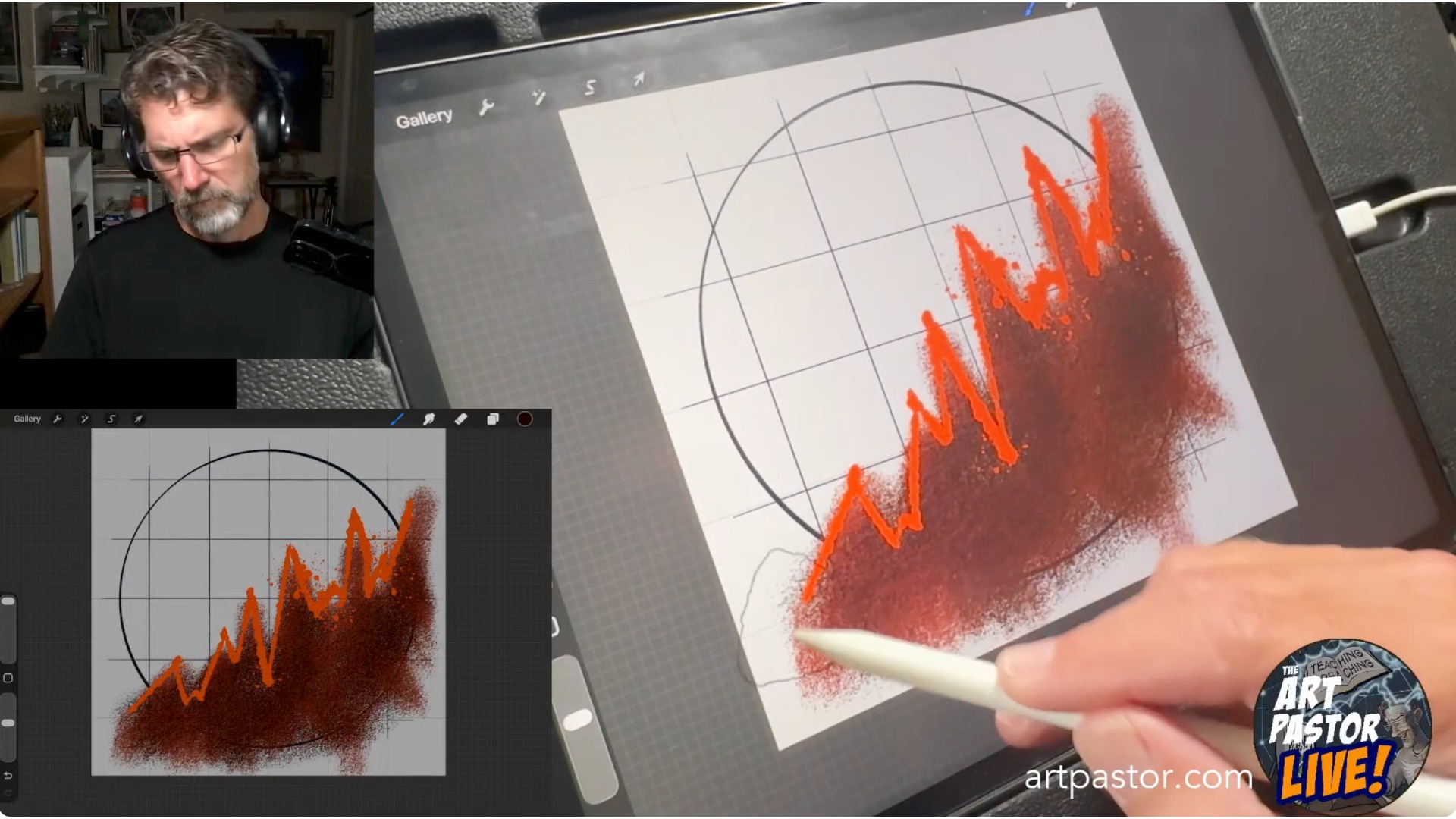
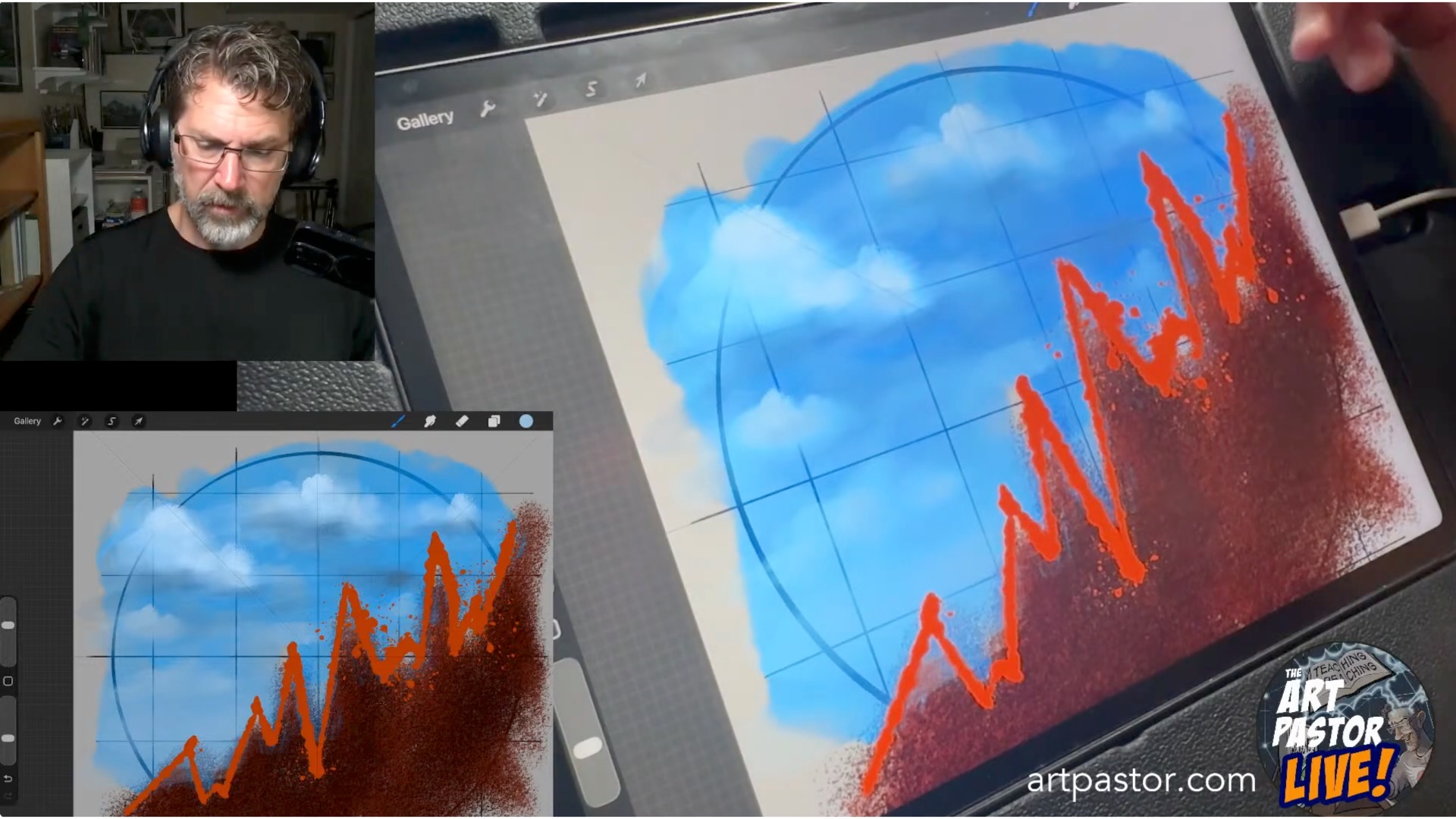
I began by creating a harsh, red coordinate graph. This X/Y axis represents our Western obsession with linear metrics, efficiency, and left-to-right tracking. Behind it, I painted soft, ambient clouds, grounding the grid in the breath of God.
- The Radial Circle
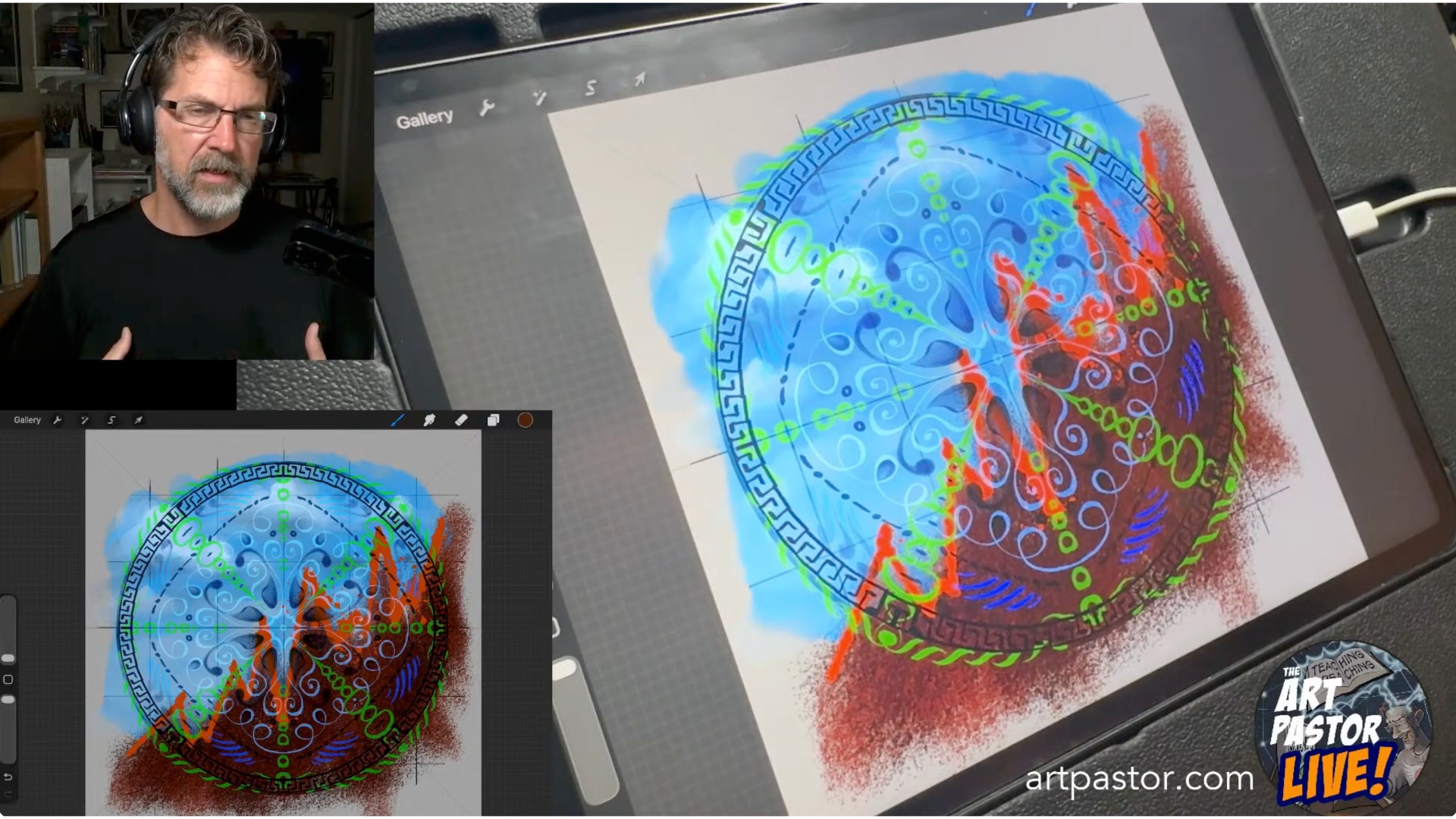
Over the grid, I activated radial symmetry. Layering rich blues, deep greens, and dark hues, I drew intricate, mandalic rings expanding from the center. This circular motif symbolizes seasons, rhythms, and repeating cycles. The collision between the rigid linear grid and the fluid radial geometry created a dynamic tension—a visual representation of living simultaneously in a linear world and a cyclical spiritual reality.
- The Tree of Faith
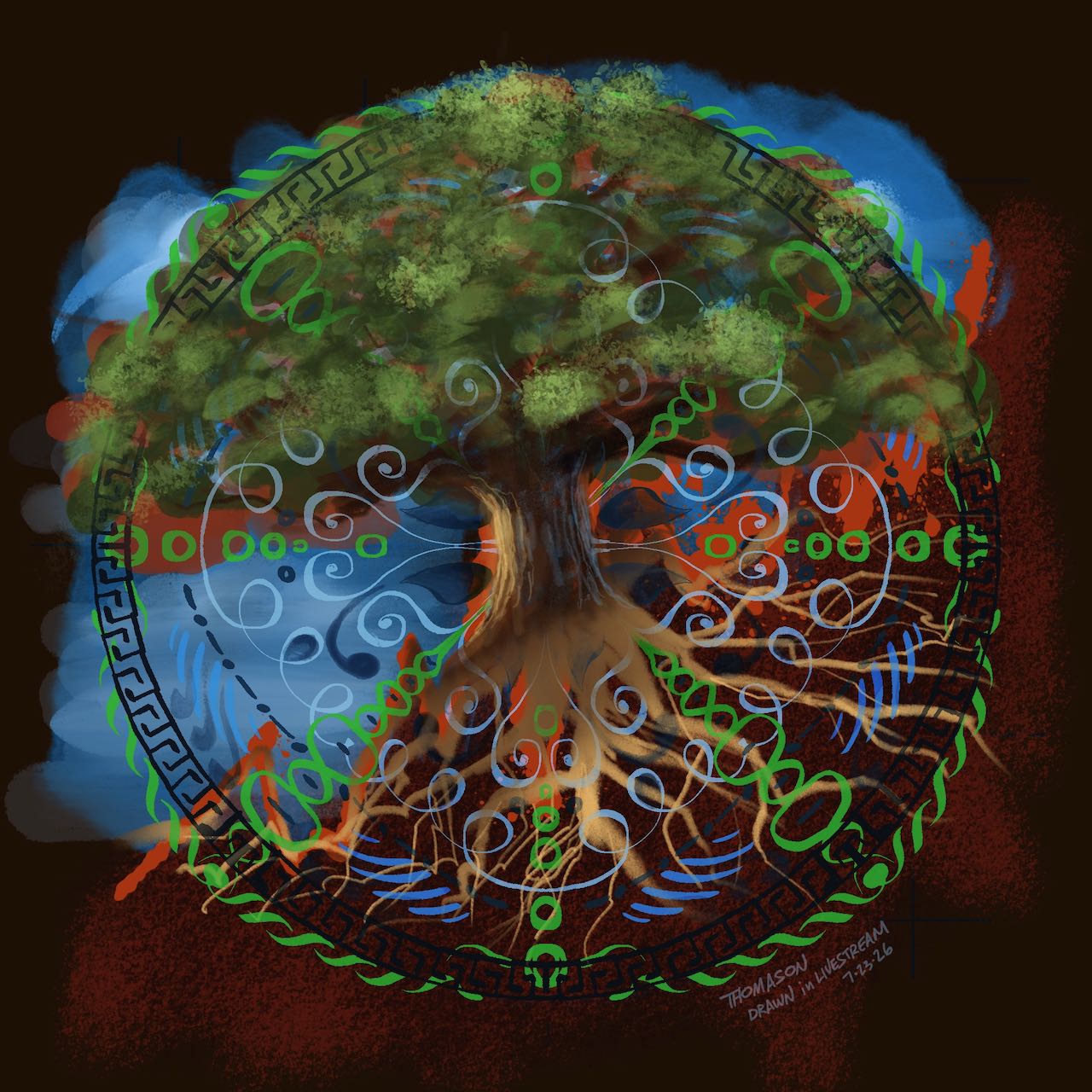
Finally, to bridge the line and the circle, I painted a tree. A tree incorporates both elements: it grows upward and outward over time (linearity), but it does so through annual rings, shedding leaves, and seasonal dormancies (cyclicality).
- Deep Roots: I painted extensive roots reaching deep beneath the soil. So much of our spiritual growth happens beneath the surface where no one else can evaluate it. Down in the dark, the roots form symbiotic partnerships with fungal networks, absorbing living water and hidden nourishment.
- Interwoven Life: By interweaving the canopy and trunk through the radial geometry and linear grid, the tree transforms the space. It takes the cold metrics of the line and the infinite loop of the circle and grounds them into a living, fruit-bearing reality.
As Psalm 1 reminds us, the person whose delight is in God’s instruction is like a tree planted by streams of water—yielding fruit in its proper season.
This is the final image…
A Prayer for the Journey
Whether you feel like you are in a season of vibrant blossom, heavy pruning, or quiet subterranean winter, remember that the Kingdom of God is quietly doing its work within you. You do not have to inspect every weed in the field, nor do you have to force yourself up an artificial ladder of perfection.
Gracious God,
Give us eyes to see and ears to hear how your Kingdom grows.
Release us from the anxiety of linear metrics and the need to judge our progress.
Plant us deeply by your streams of living water.
Teach us to trust the quiet, hidden seasons of our souls, knowing that you are making all things beautiful in your time.
Amen.
Watch the Creative Process
You can watch the full session recording above to see this visual reflection created in real time. If you created your own artwork during the stream, please share it with our community at the The Art Pastor’s Network.

This is my chance to invite you into my studio, talk about the fusion of art and theology, explore spirituality and scripture through visual art, nerd out about the Bible and Visual art, and just hang out with you.

