I had the great joy of teaching a three-day intensive class last weekend at Luther Seminary. We call this RFS (Residential Focus Session). A full credit masters course requires 40 hours of instructor-led class time. The RFS gathers distributed learners (DLs) from around the country to our campus in St. Paul, MN to spend the first 20 hours of their class in 3 days. The DL students return home after the three days and the remaining 20 hours of the course are spread across the next ten weeks through various delivery methods.
I love RFS because our campus is full of students and I get to see everyone in real time and in 3-dimensional space.
The Course
The course I’m teaching is called God’s Mission: Biblical and Theological Foundations. Here is the official course description from the catalog:
This course examines biblical, theological and theoretical frameworks for congregational mission and leadership. Students explore the Bible’s rich witness to God’s mission from Genesis to Revelation. They critically engage major paradigms in Christian mission over history and across traditions with an eye toward developing their own capacity to lead Christian communities in mission.
By the end of this course, students will :
- Gain insight into the Bible’s multi-faceted narration of God’s mission in the Old and New Testaments and the church’s identity and vocation within mission.
- Be able to reflect critically upon major historical paradigms of Christian mission and their legacies for today.
- Gain critical perspectives on evolving understandings of mission in the church’s history and their implications for congregational life and leadership.
- Develop the capacity to reflect critically on church life, practice, and leadership from a missional perspective.
- Develop biblically- and theologically-informed perspectives on how to provide leadership in a local congregation.
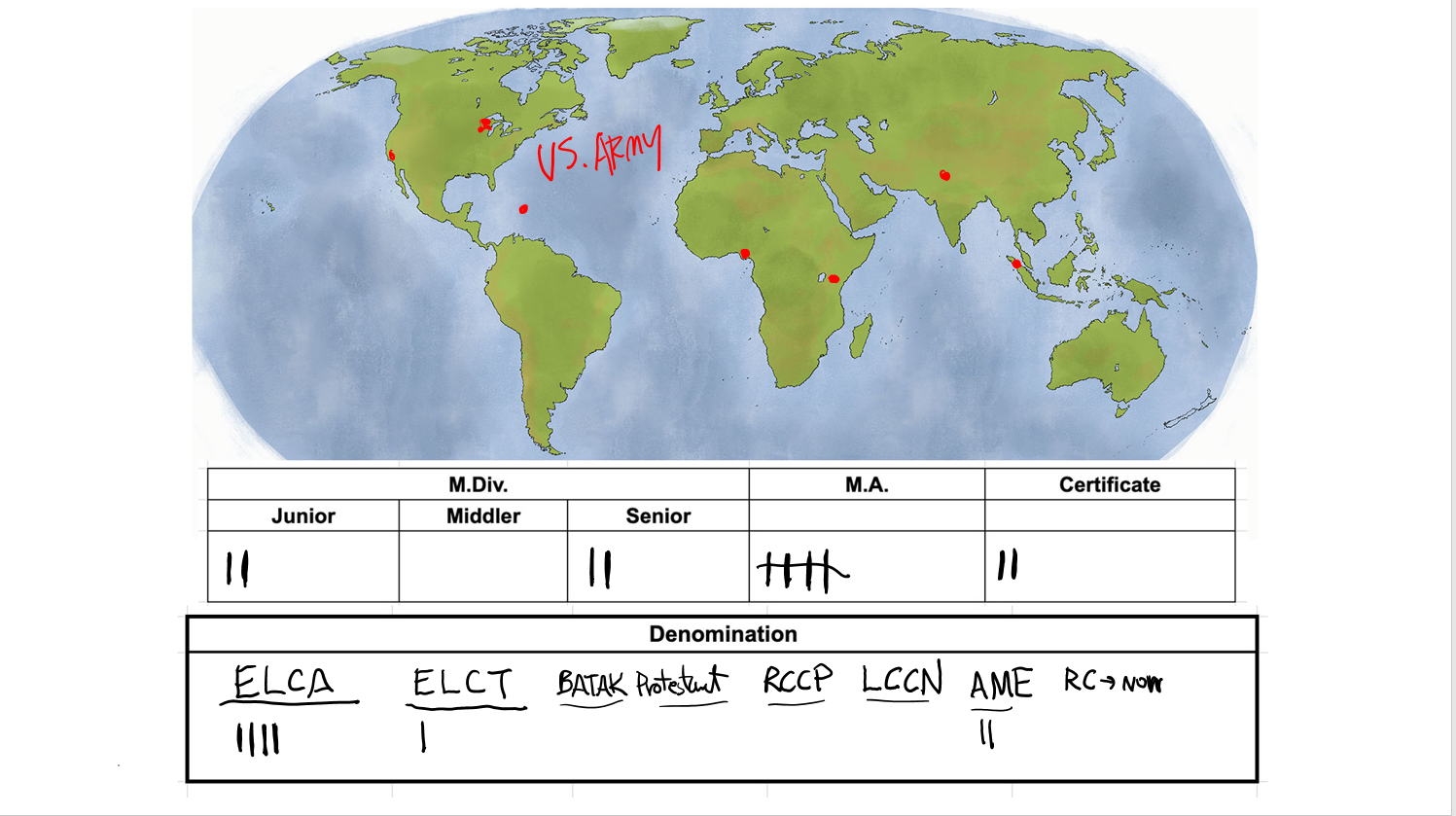
Saturday went really well and we spent most of the day establishing relational connections. It was lovely. My class is incredibly diverse. One of our first activities is to go around the circle and name our location geographically, academically, and denominationally. Check out the locations of these eleven students:
A Vision
I woke up Sunday morning with a vision. It was obvious that the students were already struggling to comprehend the main text (Transforming Mission by David Bosch). The book is dense and very academic and it is introducing concepts that are new to the them.
The vision, or nudge, I received was to attempt to create a big-picture overview of what the course is trying to present. I have created thousands of colorful slides and multiple animations over the years to teach the various components of this course. That means I have way too much content to present.
Then it hit me. I have a chalkboard. A big, beautiful blank slate that would allow me to chart out all the big ideas in real time. I sketched my idea on my computer in the early hours on Sunday. I wanted to trace the shifts in three major areas: ontology, geography, and mission. Here’s the sketch:
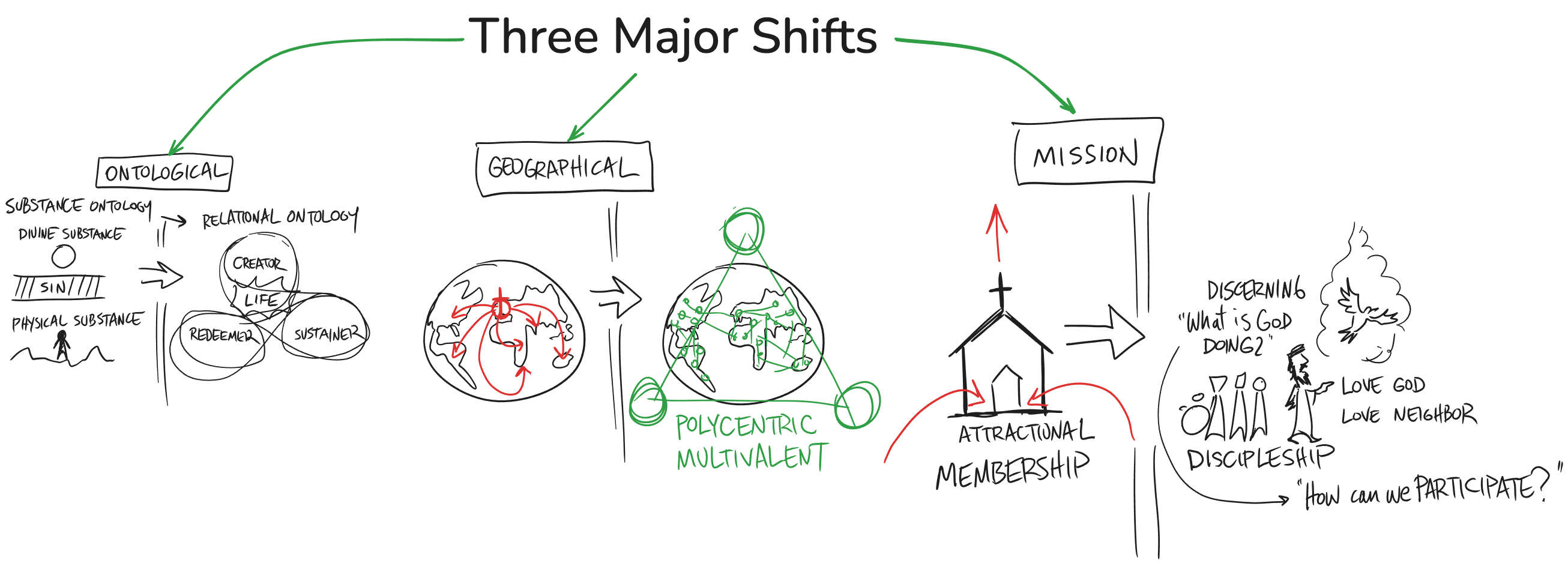
A fourth shift came to me while I was driving to campus: cosmology. By the time I got to campus I had a picture of Four Major Shifts that I wanted to present in class.
I created a one page handout that was mostly blank, but had these three images at the top.
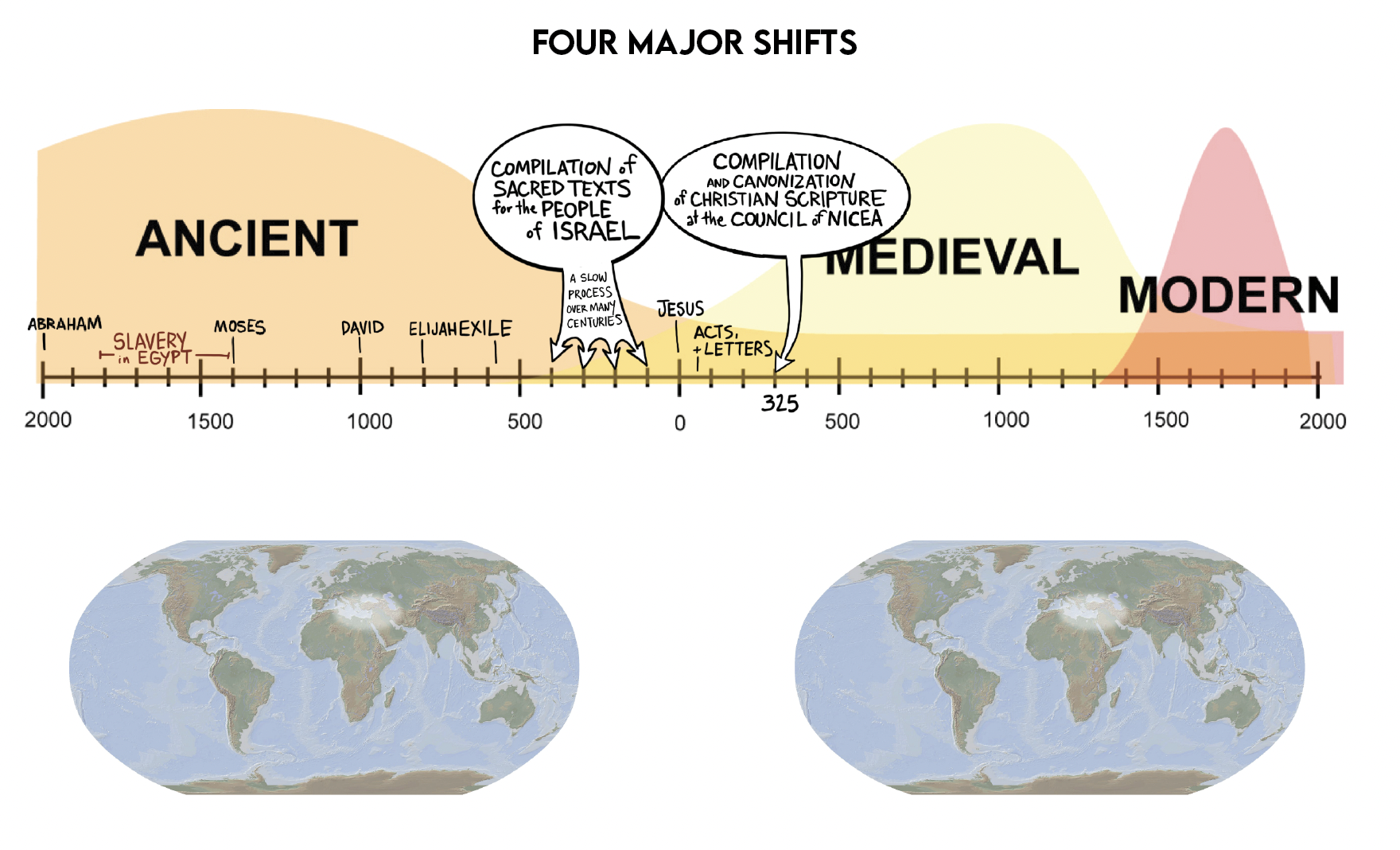
This gave the students a basic framework for my lecture and would allow them to mimic my chalkboard creation in whatever way made sense to them.
I decided that we had all day, so I would take as much time as I needed to walk through an overview of the four major shifts that brought us to our present moment in North American Christianity and this thing that some of us call a Missional Imagination.
It took 3 hours!
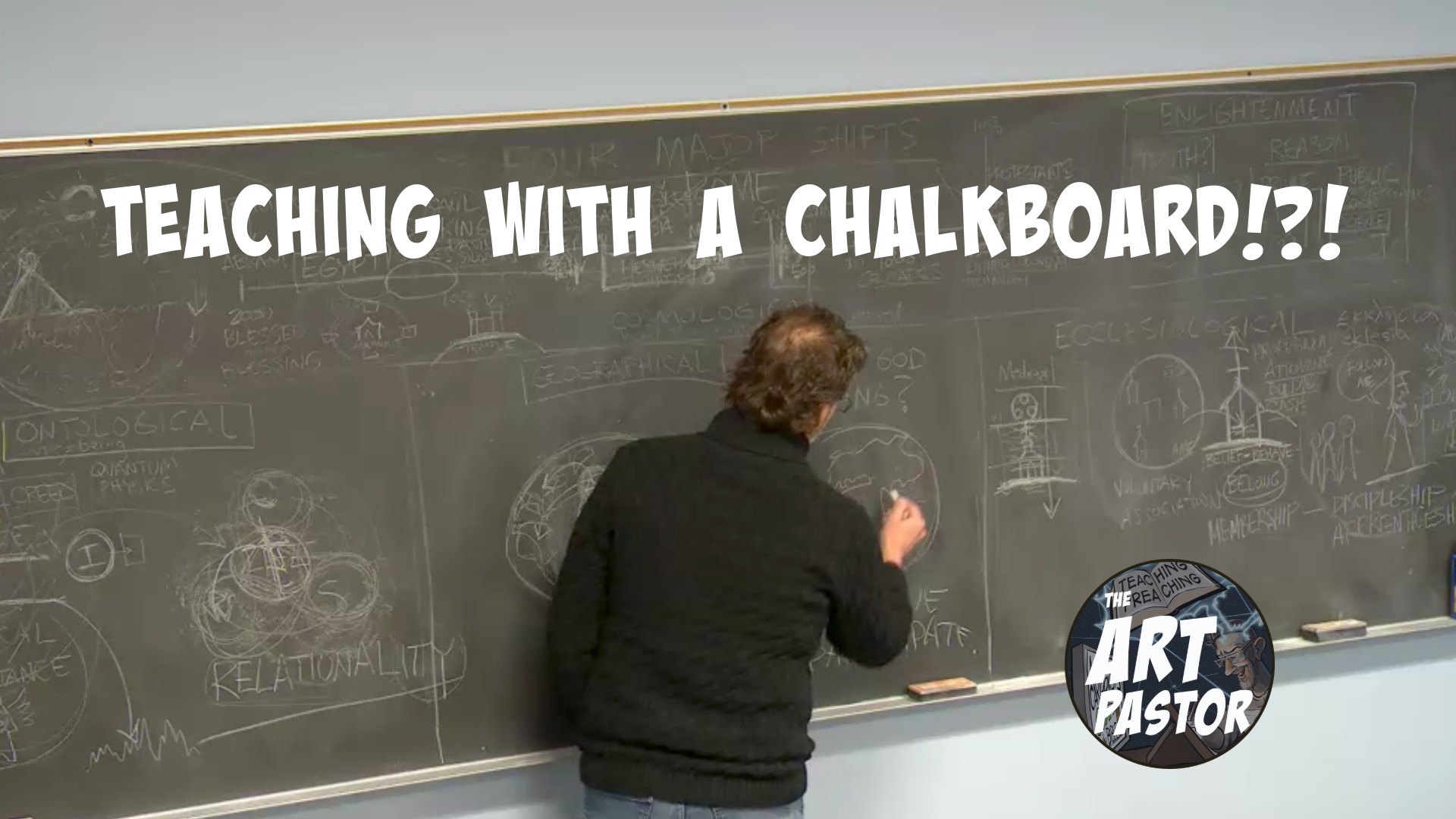
We recorded the session because one of the students became ill on Saturday evening and had to miss Sunday. We are so fortunate to have a high-tech hybrid Cisco classroom that allowed us to record the entire session.
The class went well. I had a blast and the students offered genuinely positive feedback.
I downloaded the audio of the 3-hour lecture and loaded it into my transcription service called Sonix (which I use for my research project). It transcribed the audio and I converted it to a Word Document.
My 3-hour lecture has 21,710 words and spans 64 pages of 12point, double-spaced type!
That is a lot of hot air!
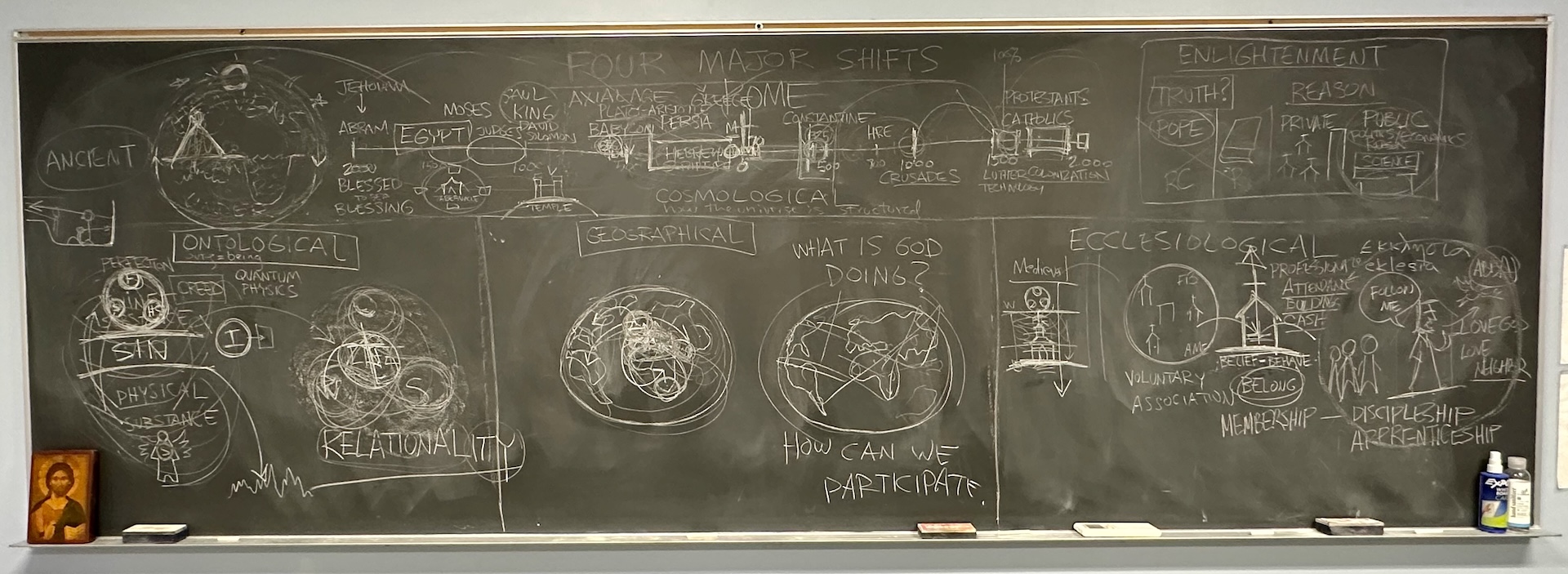
Here is a very brief overview of what this chalkboard is trying to represent.
A Summary of the Presentation
The current missional imagination has occurred as the result of four significant shifts in human experience:
- Cosmological
- Ontological
- Geographical
- Ecclesiological
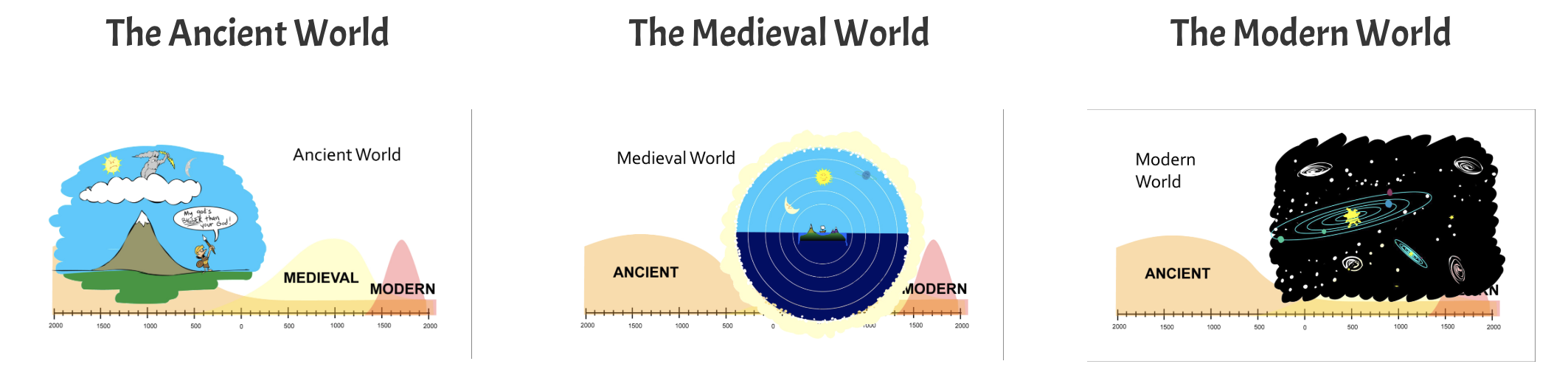
Cosmology
is the study of the universe and how it is structured. How we understand the structure of the universe shapes the way we think and talk about the Divine.
Western society has experienced three major cosmological eras: Ancient, Medieval, and Modern. We are currently shifting into a post-Modern era.
This is the image I usually use.
It comes from my overview of these shifts here.
Ontology
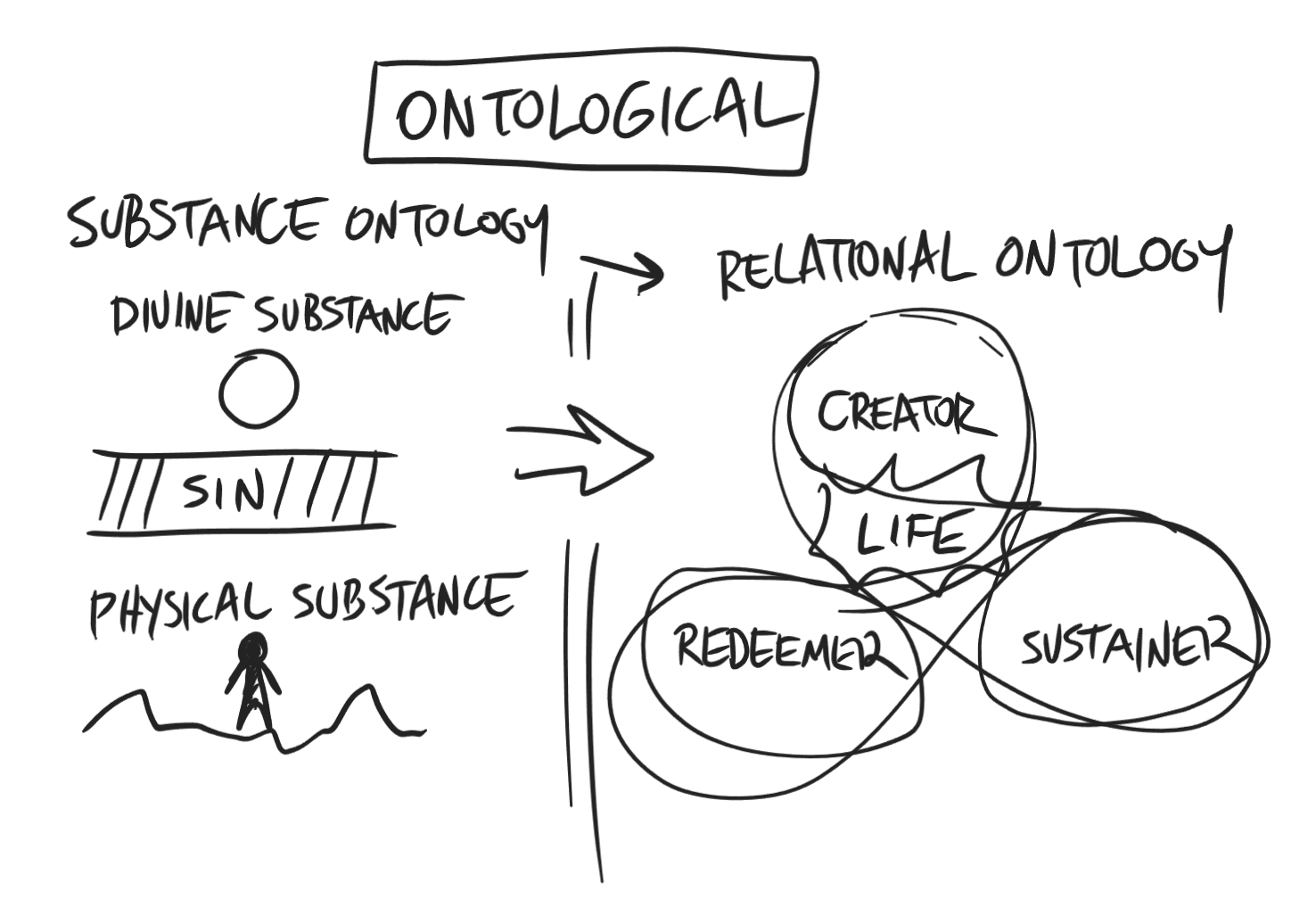
is the study of being itself. What is the basic essence of existence? I traced the shift from Platonic Dualism to Relational Ontology and the Relationality of the Divine.
Geography
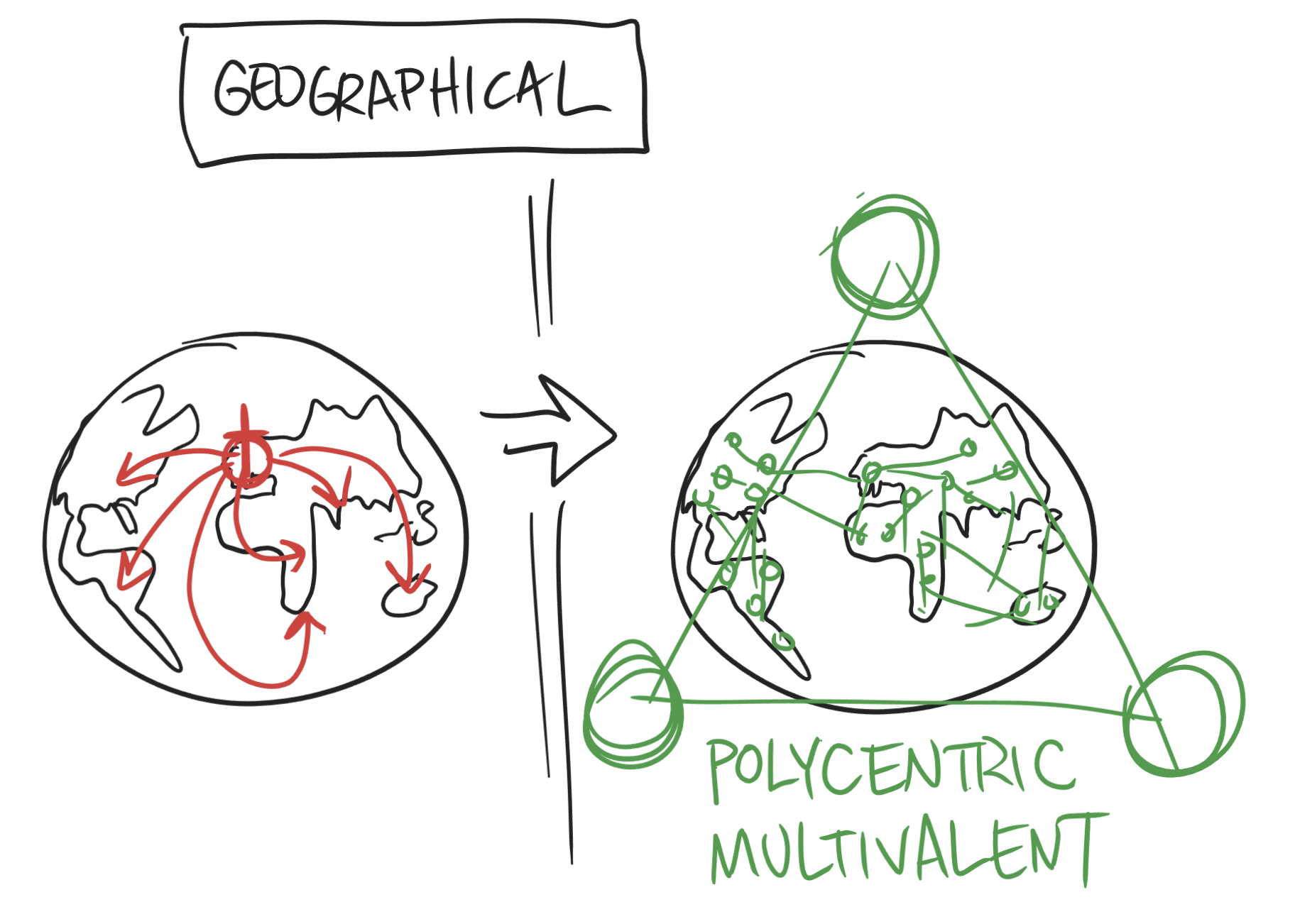
The geographical shift had to do with colonization. I talked through how Western European Christianity came to view itself, and whiteness, as the supreme way to understand God and the world. I named the complicity of Western European missionary work in the colonization and oppression of the global south. This led to very raw and powerful conversations, considering that the majority of my students represent the people that White, Western Christianity oppressed in the name of Jesus. That conversation is worth multiple blog posts!
The missional imagination acknowledges the complicity of Western missiology in colonization and racial injustice. It also recognizes that the Spirit of God is everywhere, in everything, and always working to invite creation into God’s vision of justice, righteousness, and shalom for all things.
The geographical shift was really a directional shift. The arrows don’t move from Euroupe to the world. The arrows flow from everywhere to everywhere in a networked web of life.
Ecclesiology
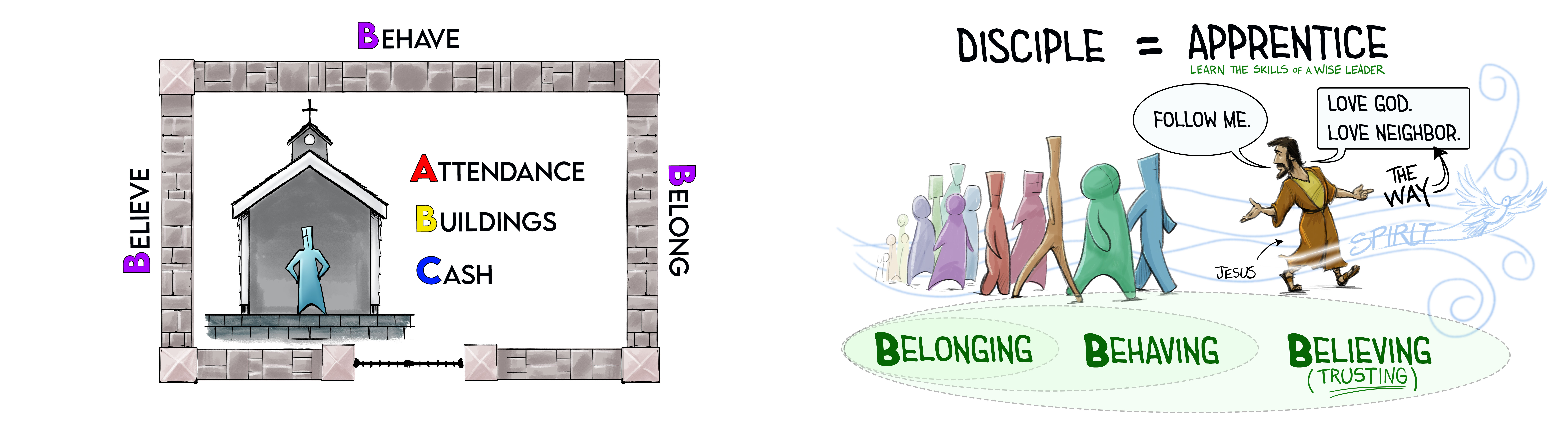
is the study of the Church. What is it and what is it called to do? The missional imagination notes a shift from membership to discipleship. What if the church was not a fixed place with rigid boundaries, as it was throughout most of Western Christendom. What if it was a vast network of small groups of people, from various contexts, who were centered on the risen Christ, following the Holy Spirit, asking, “What is God doing and how can we participate?”
The Final Product
Here is what the chalkboard looked like at the end of the day. It was so much fun to create this in real time, moving all around the image as the concepts unfolded.
I’m such a nerd. 🙂