

Matthew 22:1-14 records Jesus’ parable of the King’s Wedding Banquet. In this post I offer two interpretations of the text. Option A is the most widely accepted by biblical scholars. Option B is an alternative interpretation that turns Option A on its head. Let’s trace the history of my relationship with these options since 2015. If you aren’t interested in that, then I invite you to skip to commentary
The Timeline
March 2015
I was the associate pastor at Grace Lutheran Church in Andover, MN. We were preaching the Narrative Lectionary and this parable was the text. I was also preparing to defend my PhD dissertation from Luther Seminary in June of that year.
I made this video (look how young I am!). My YouTube channel was new and I was experimenting with digital media.
I preached this sermon at Grace that week. The slides are embedded there.
March 2019
I had changed calls and was now serving Easter Lutheran Church in Eagan, MN as the Family Pastor. We were preaching the Narrative Lectionary and it was time to preach this passage again. I was illustrating A Cartoonist’s Guide to Matthew at the time, so these illsutrations were hot off the press. Read this commentary to to see how I acknowledge the alternative interpretation, but don’t go into as much detail.
October 2023
I was in my second year on the faculty of Luther Seminary. The Cartoonist’s Bible Network was emerging and I was having fun leading the weekly Text Study. I was not preaching in a congregation any more, but was committed to producing a weekly visual resource for both the Revised Common Lectionary and the Narrative Lectionary.
The visual commentary below was produced for that text study.
October 2026
The Cartoonist’s Bible Network is now called The Art Pastor’s Network (same group, new name). I publish a weekly Visual Lectionary for the RCL and Narrative Lectionary. It is time to reflect on this parable, yet again.
This time I noticed something missing from my previous work…WHAT IS MY SOURCE?!?
I knew that I had read a commentary back in 2015 that I found compelling, but I did not do the due diligence and cite my sources.
So, here it is. Option B that I mention below comes from one very obscure source.
Marty Aiken is an independent scholar who writes about René Girard’s mimetic theory. He presented The Kingdom of Heaven Suffers Violence: Discerning the Suffering Servant in the Parable of the Wedding Banquet,” at the 2003 Colloquium on Violence & Religion (COV&R) conference at the University of Innsbruck.
Here are the first two paragraphs of the paper:
I propose in this paper a new reading of the parable of the wedding Banquet in Matthew (Matt. 22:1-14). My proposal is that Jesus uses this parable to declare to the ruler’s representatives, and the world, that Jesus’ authority will be the authority of the suffering servant. Jesus does this by structuring the parable so that he can introduce into the parable the figure of “suffering servant” from Isaiah, especially Isaiah 52:13-53:12. The servant figure in the parable with whom Jesus identifies is the man without the wedding garment who suffers expulsion, and worse, at the hand of the king.
The universally accepted reading of this parable comes to the exact opposite conclusion. The king introduced at the beginning of the parable is understood as a reference to God, and the violence the king calls down upon the unrobed man is interpreted as sacred violence levied in judgment for the man’s absolute recalcitrance at accepting God’s invitation into his kingdom.
There you have it. Option B stands on the fringe of Biblical Interpretation history. Take it or leave it. I think it is very interesting and compelling.
Visual Commentary on Matthew 22:1-14
The parable of the King’s banquet in Matthew 22:1-14 is a very difficult parable to understand. So, here’s what I want to do.
First, I’m going to give you some context for where it falls in the bigger story of Matthew’s Gospel.
Second, I’m going to make sure we have the pieces of the parable clear.
Third, I’m going to give you two possible ways to interpret the parable and see which one makes the most sense.
Finally, I offer some final thoughts and a “so what?”
The Context
The scene really starts back at the beginning of chapter 21.

Jesus enters into the city of Jerusalem riding on the back of a donkey. We call this the Triumphal entry. The people all shout, “Hosanna, Hosanna! And treat him like a king.” This makes the city leaders very angry.
Then Jesus goes to the temple courts and throws over the money-changers tables, and drives them all out with a whip. Jesus is on a mission.
The leaders are outraged and they confront Jesus. Look in verse 23. They say,
“By what authority are you doing these things, and who gave you this authority?”
Jesus tells them three stories to explain it.

Our passage today is the third story..
The Parable
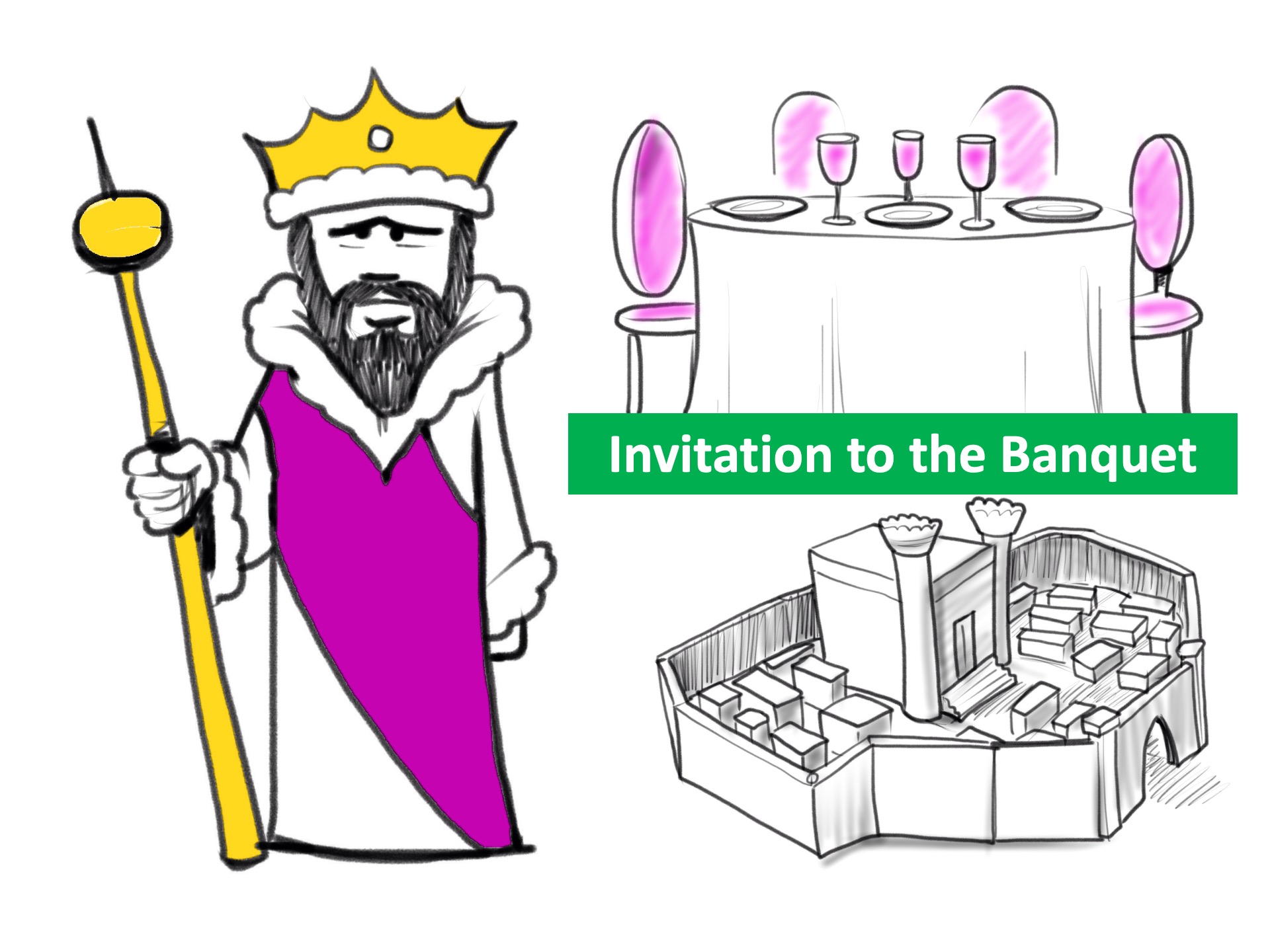
There is a king who is having a wedding banquet. He sends his servants to announce to the invited guests that the banquet is ready.
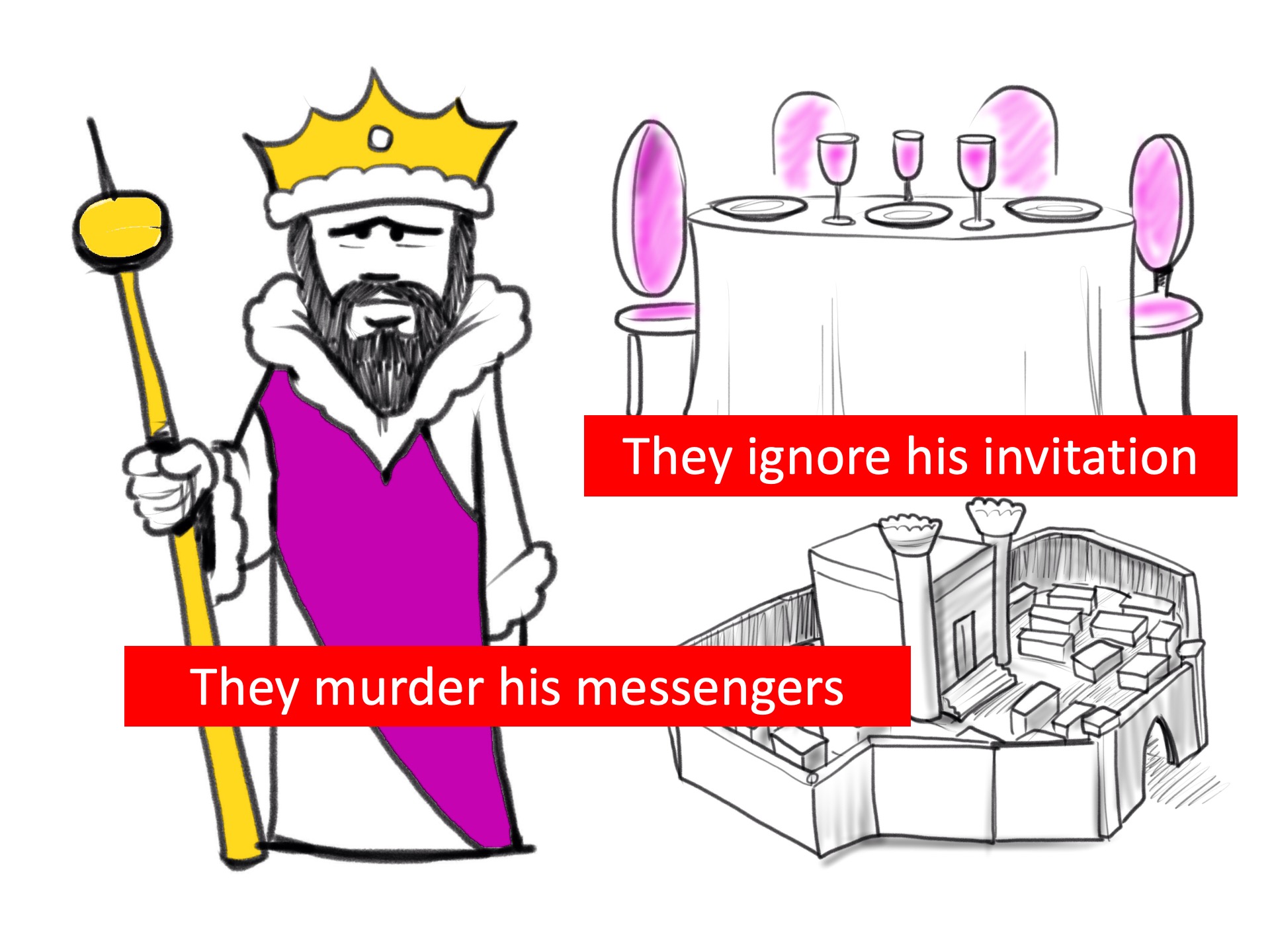
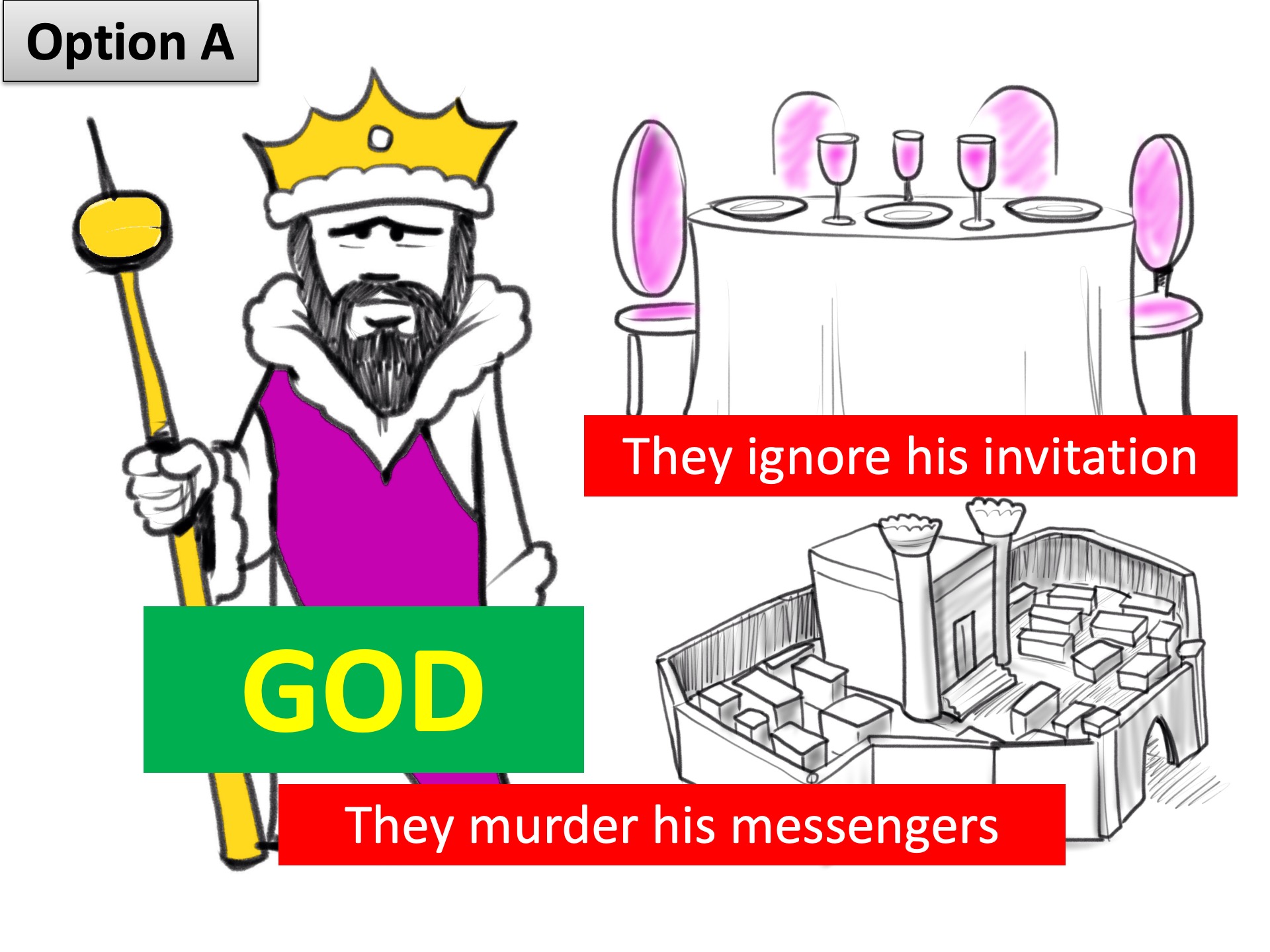
The invited guests respond in two ways. Some ignore the invitation and keep going about their business. They would rather mow their lawns than attend the royal banquet. Others respond with violence and they abuse the King’s servants, and even kill them.
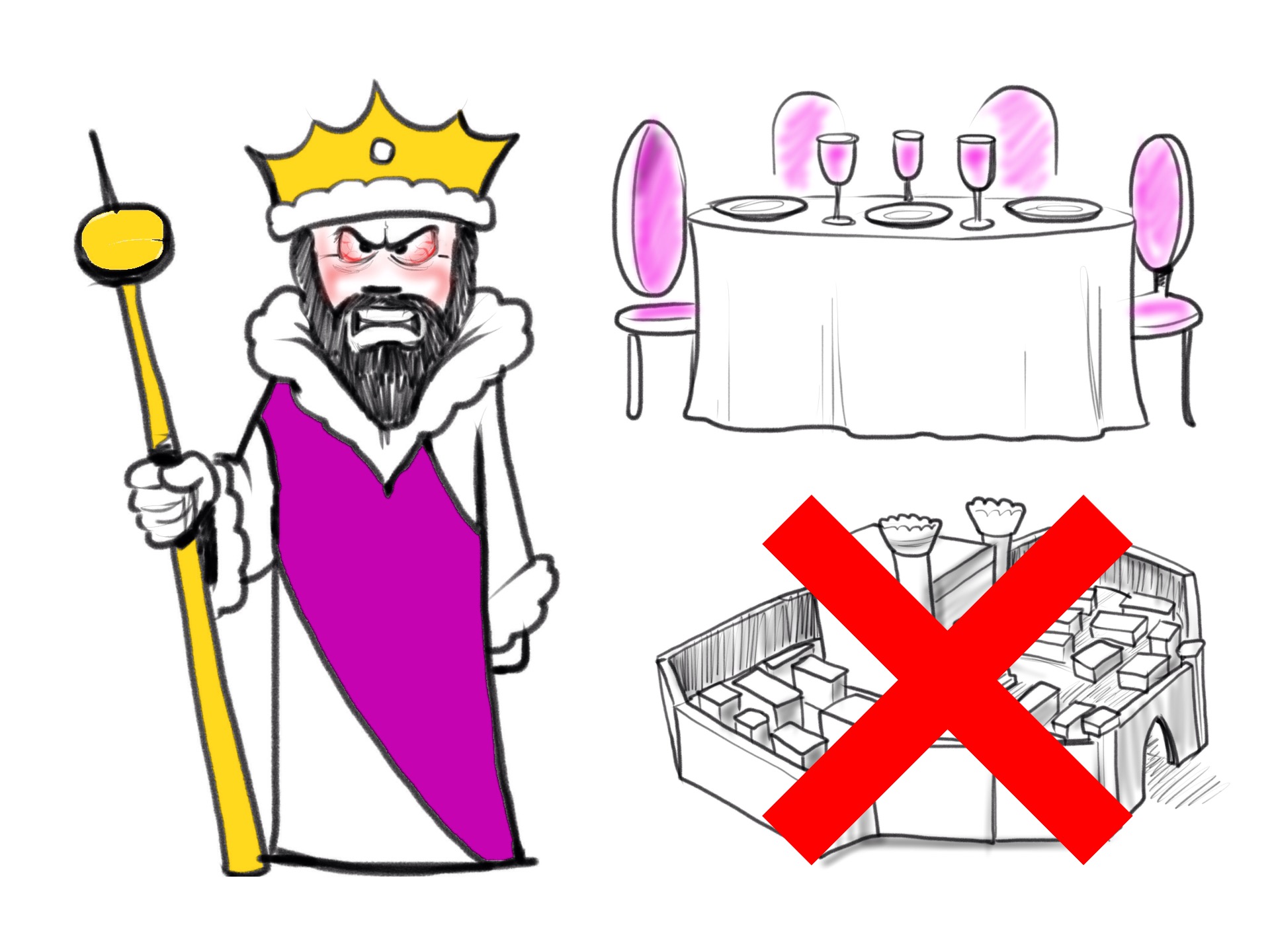
The King becomes enraged. He kills them and burns the city. Yikes!
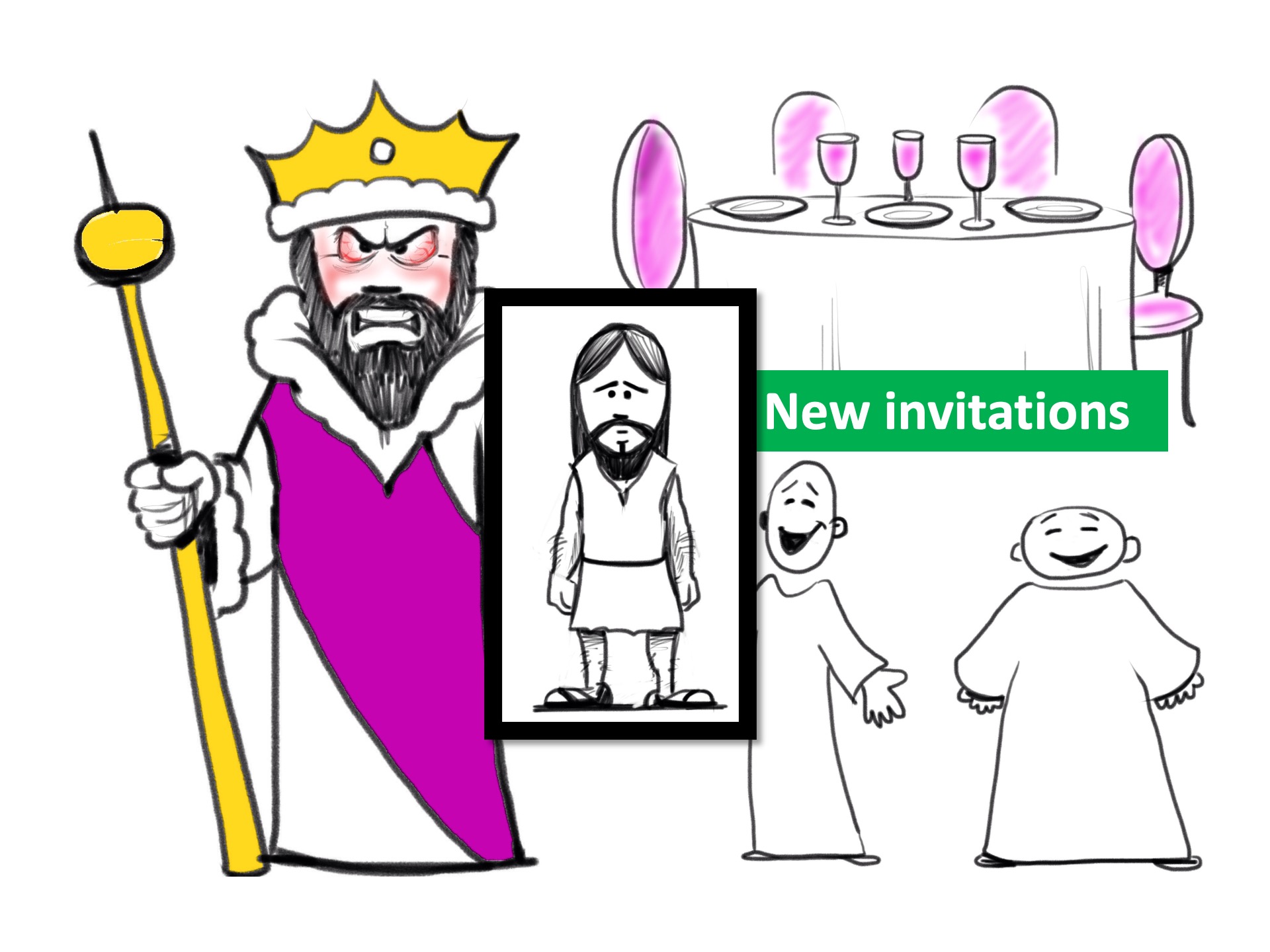
Then he tells the slaves to invite people from the main streets and gather them into the banquet hall. The hall is filled and all seems well, until one guy catches the King’s attention.
This guy is not dressed for the banquet. “Friend, how did you get in here without a wedding robe?” And he was speechless.
The king had the man bound, hand and foot, and thrown out into utter darkness where there is weeping and gnashing of teeth.
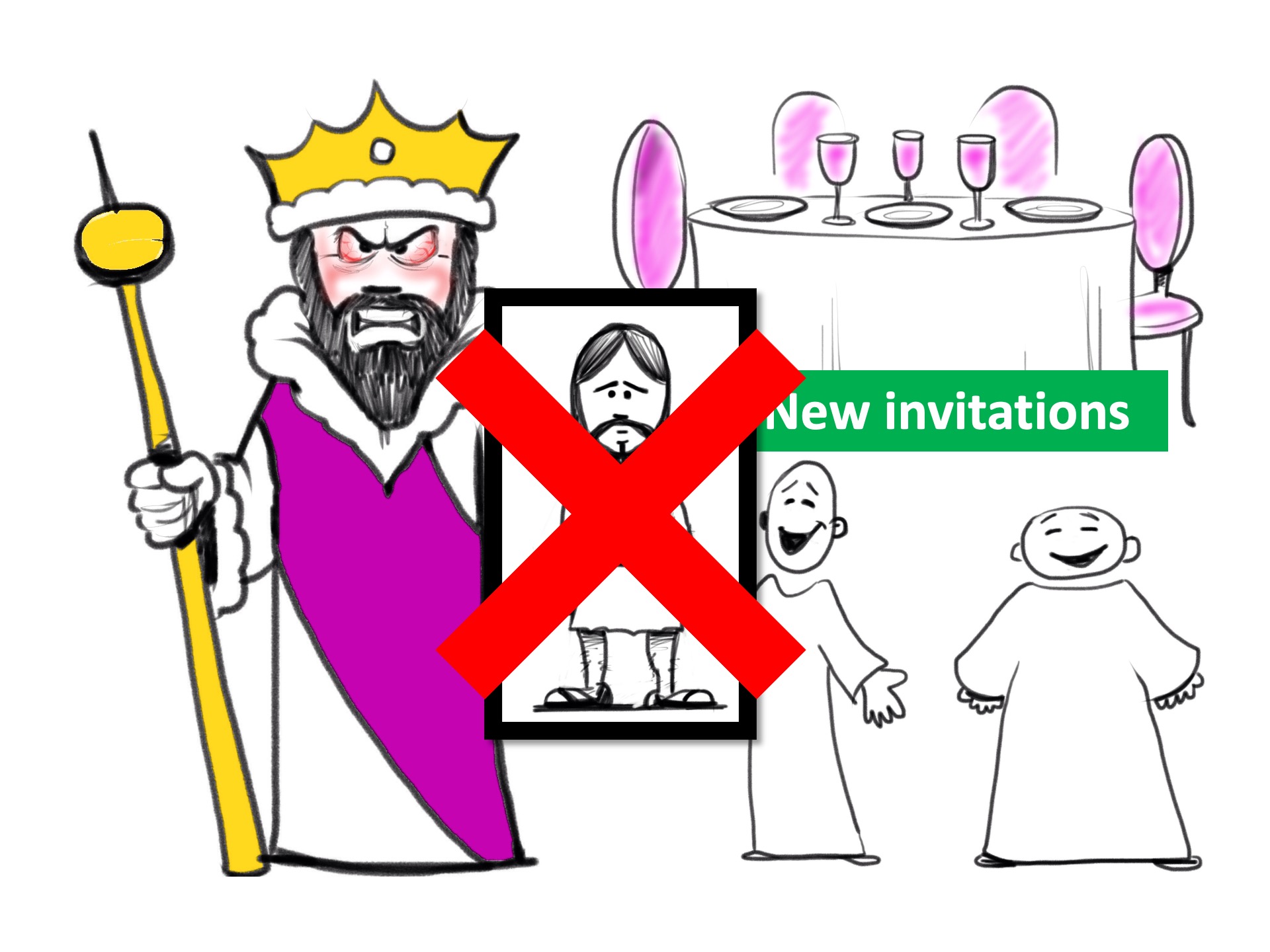
Wow! Isn’t that an uplifting parable? Thank you, Jesus, for that.
So, what do we do with this parable? How does it fit in our theme of living upside down?
I want to present to you two possible ways to interpret this parable.
Option A
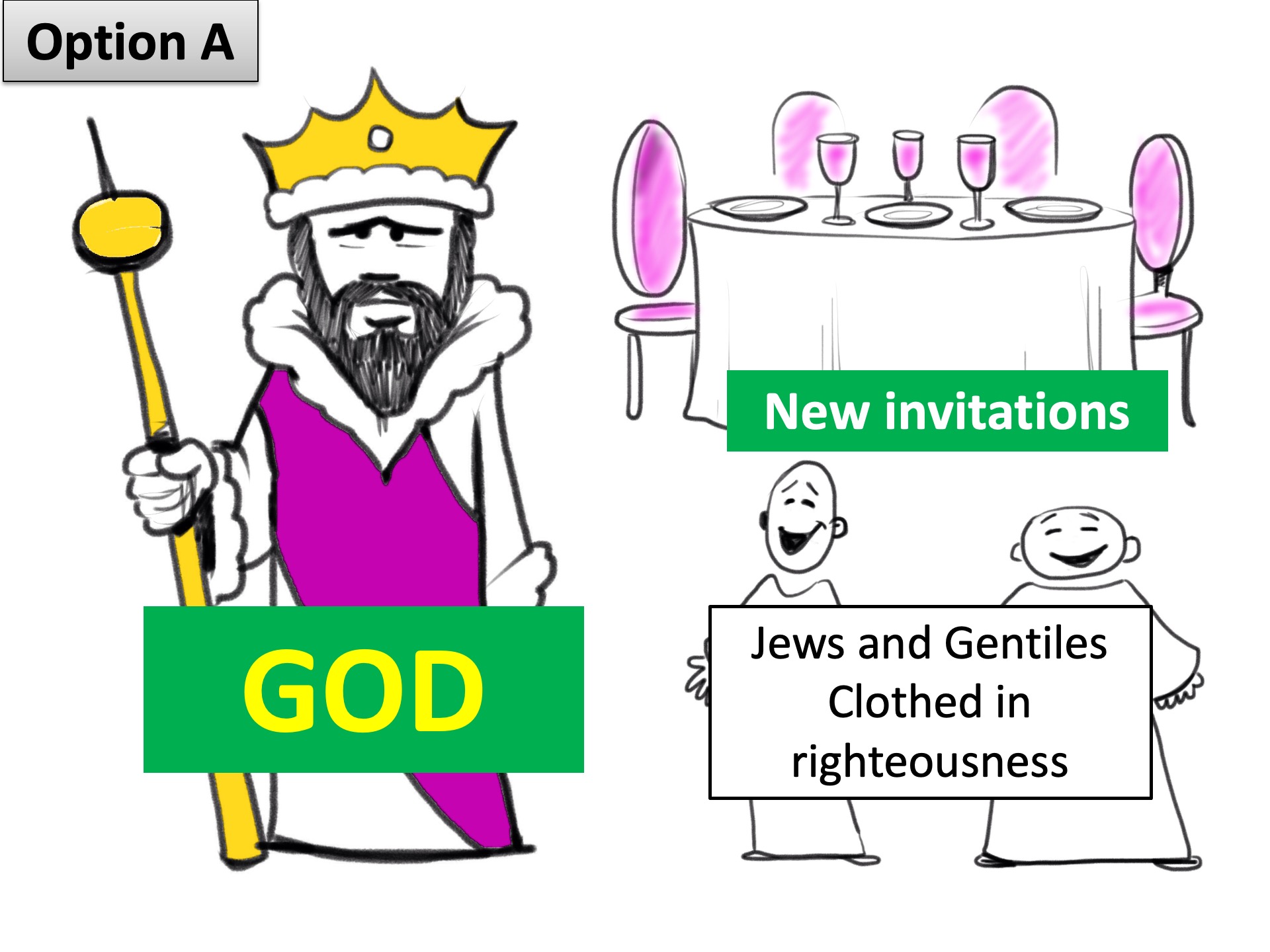
The parable is an allegory. The King represents God and the banquet represents the Kingdom of Heaven, the way God has always intended the kingdom to be. Israel was the vineyard that was supposed to bear the fruit of God’s blessing for the nations.
The invitation was God’s blessing to Israel to be the blessing to the world.
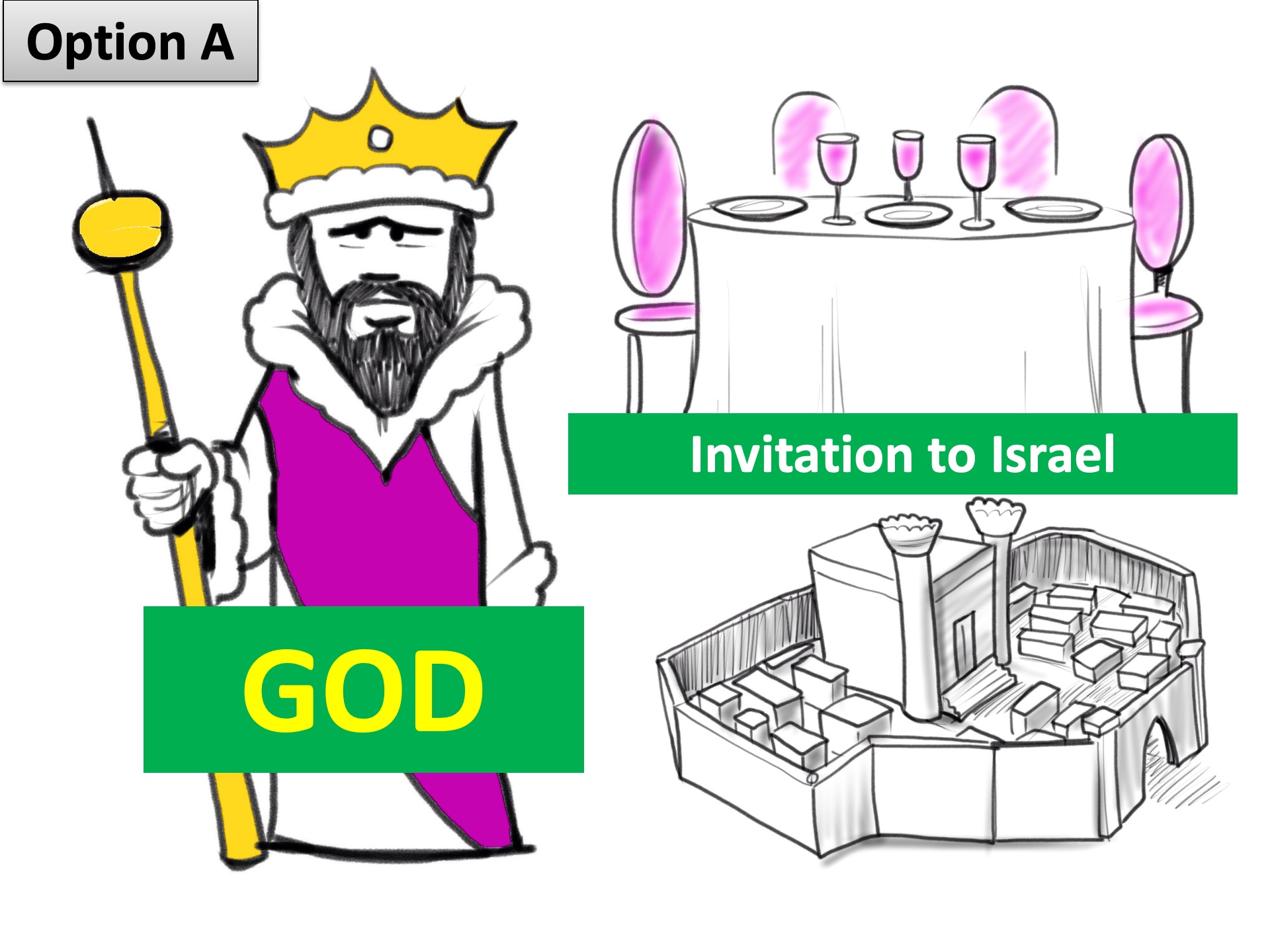
Israel rejected the invitation. Some ignored it, some became violent against it.
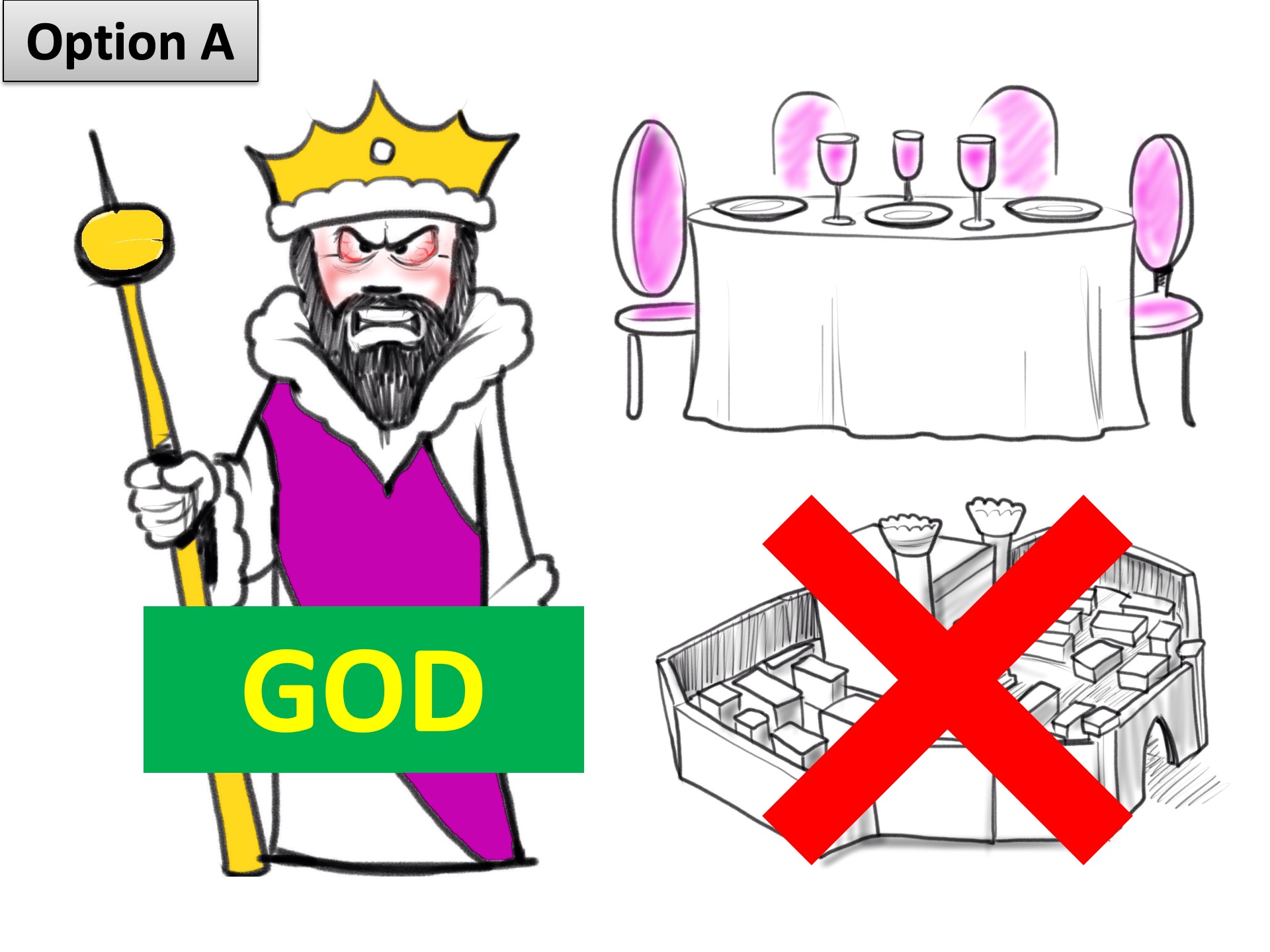
So, God wiped them out. The city of Jerusalem was destroyed in A.D. 70.
The new invitation is the Gospel presented by Jesus that is for all people, good and bad. There is room for everyone at the banquet, Jew and Greek alike.
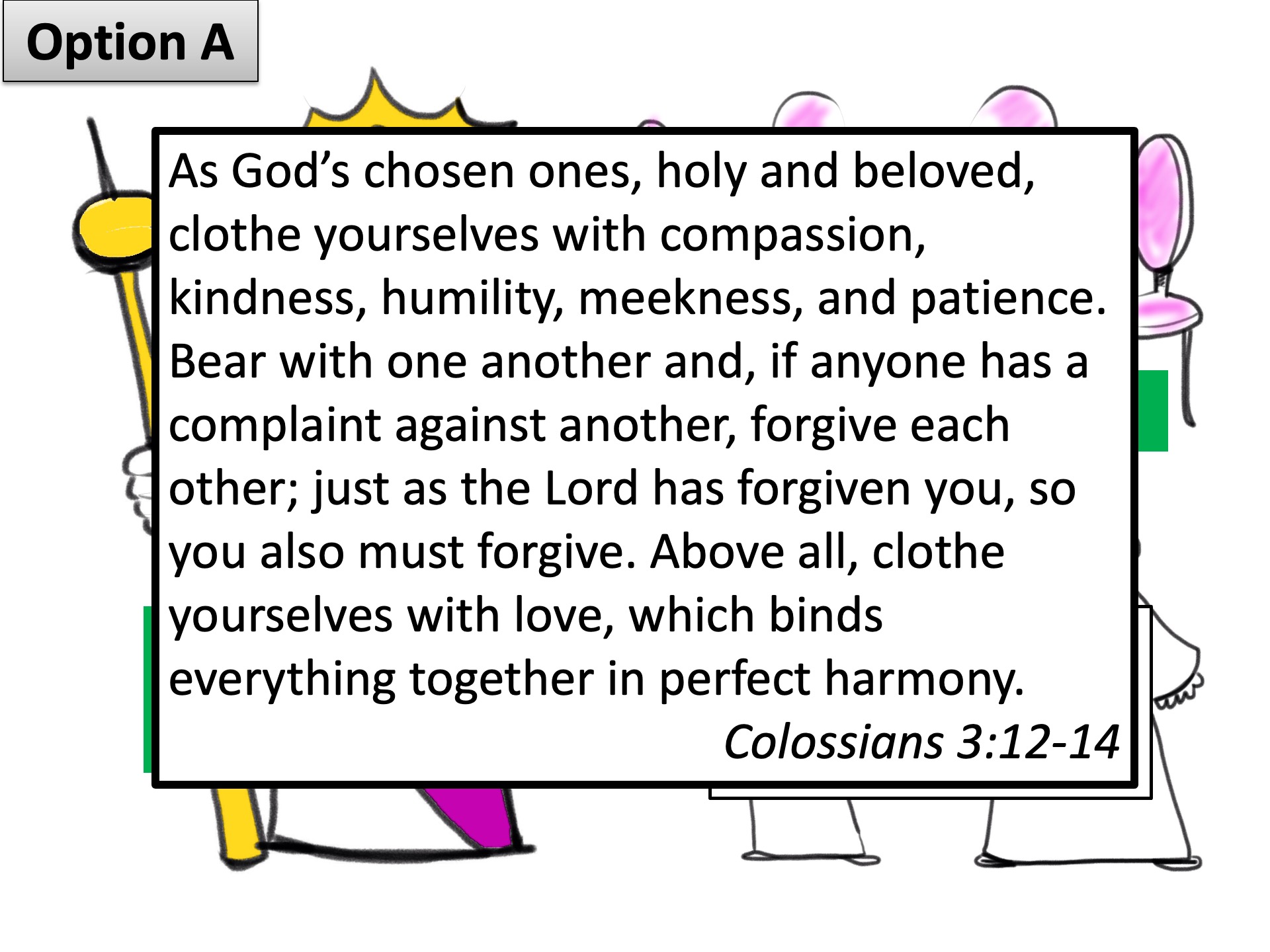
The wedding clothes represent the fruit of the Spirit. It is like the apostle Paul said in Colossians 3:12-14,
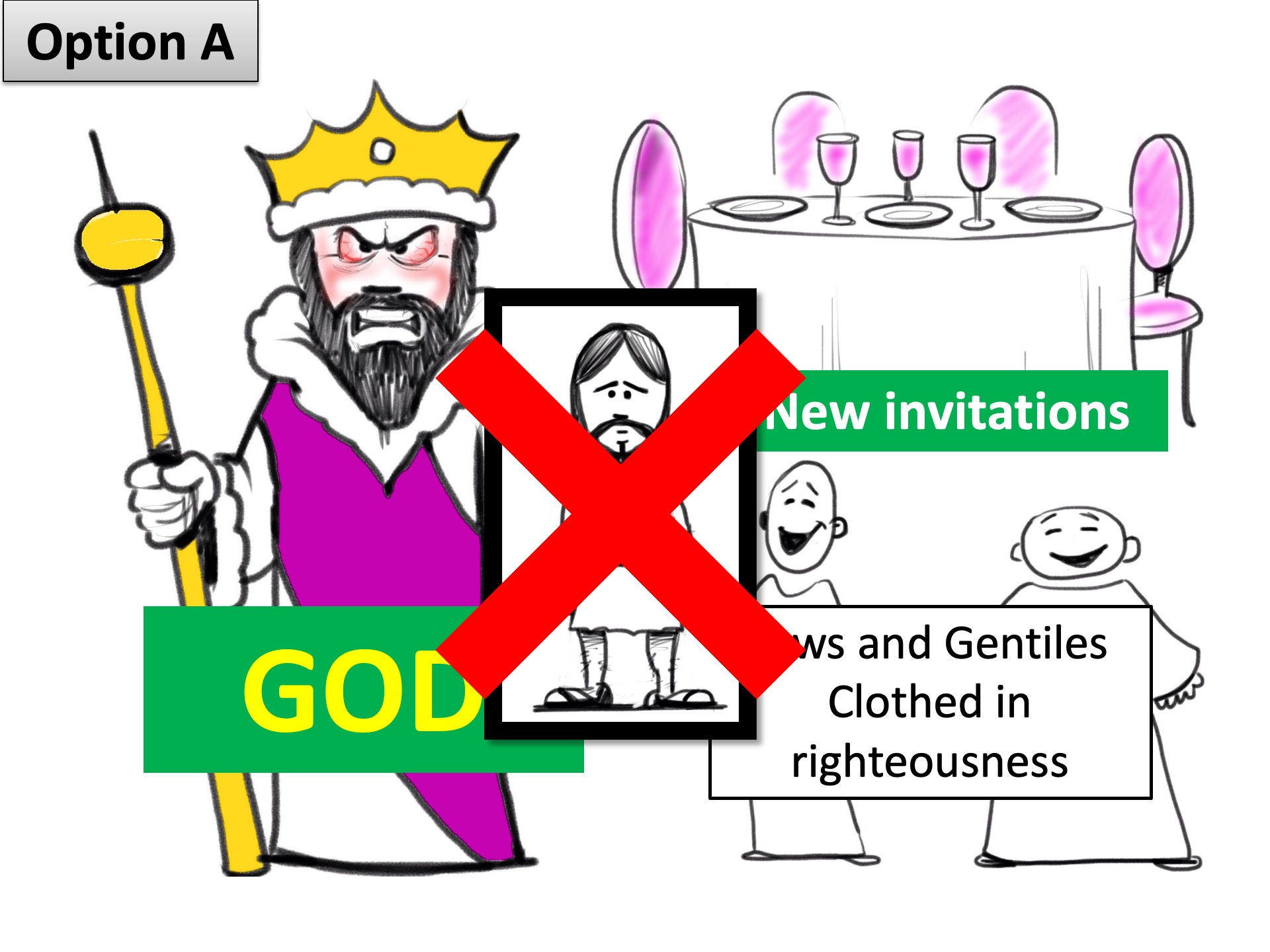
There is room for everyone, except for the one who is not properly dressed.
The man who was not dressed properly was like the person who takes God’s kingdom for granted. They are missing the point. God wants us to party in God’s love. Why would you not want to be part of that.
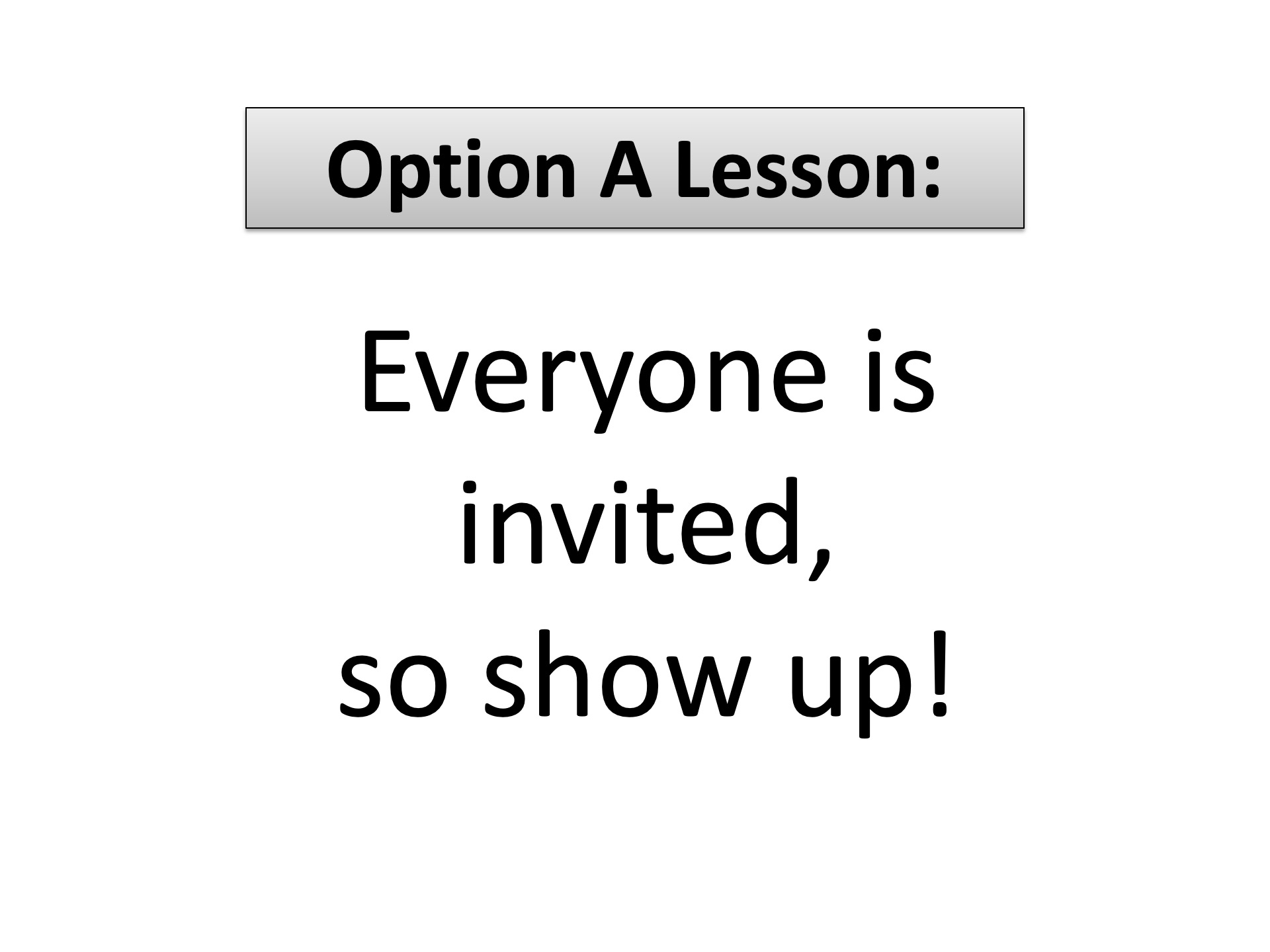
The take home lesson from this interpretation is this. You’re invited, so show up!
It emphasizes the tension between the radical grace of God on one side, and the responsibility and accountability of participating in the banquet feast, producing fruit, on the other.
That interpretation works, but it leaves me with one observation. God is murdering and destroying people who don’t do it his way. That seems like the opposite of what Jesus has been preaching about the Kingdom of Heaven.
Option B
What if Jesus were actually referring to an historical event that happened in the city of Jerusalem that everyone would have know about when he was telling this parable. The way he opens the story is slightly different than his other parables where he says, “The Kingdom of Heaven is like…” Here he says, “the Kingdom of Heaven may be compared to a king…”
What if this is a parable of contrasts?
This interpretation says that the king does not represent God, but represents Herod the Great, back when Herod took over the city of Jerusalem. At that time, the Hasmonean family was the royal family of Israel and were the rightful heirs to the throne. There was a man named Antigonus who was from this family and was the king in Jerusalem for three years, before Herod.
We have to remember that all of this is taking place under the oppression of the Roman Empire. Herod was made the King of Israel by the Roman Emperor, but the people of Jersualem did not want to accept that.
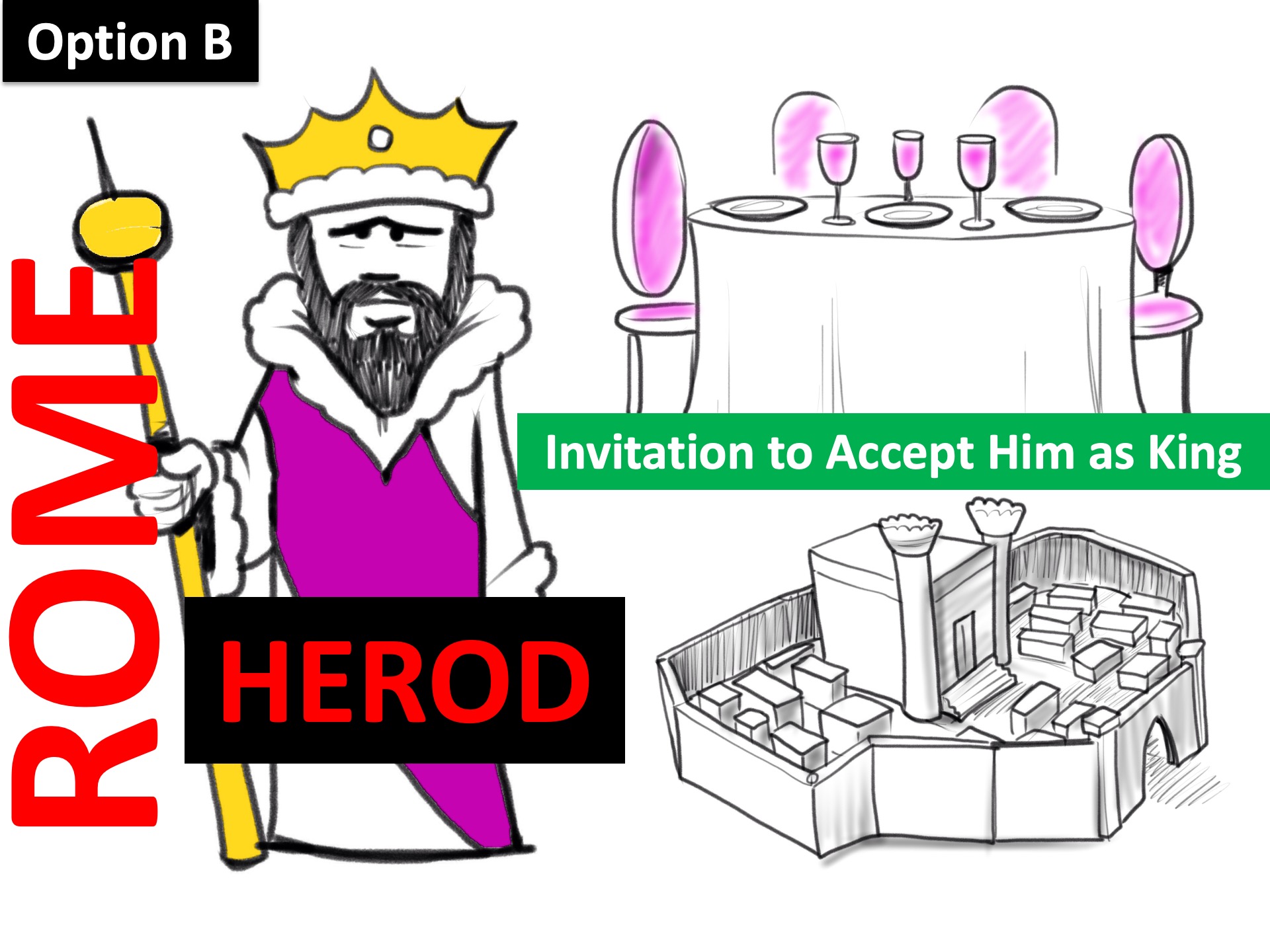
Herod came to the city of Jerusalem with an invitation. He was going to marry one of the Hasmonean women. This was the big wedding feast. He invited the people of Jerusalem to accept his marriage, and to accept him as their king, peacefully.
Antigonus advised the people to ignore Herod. Others responded violently against him and murdered his messengers.
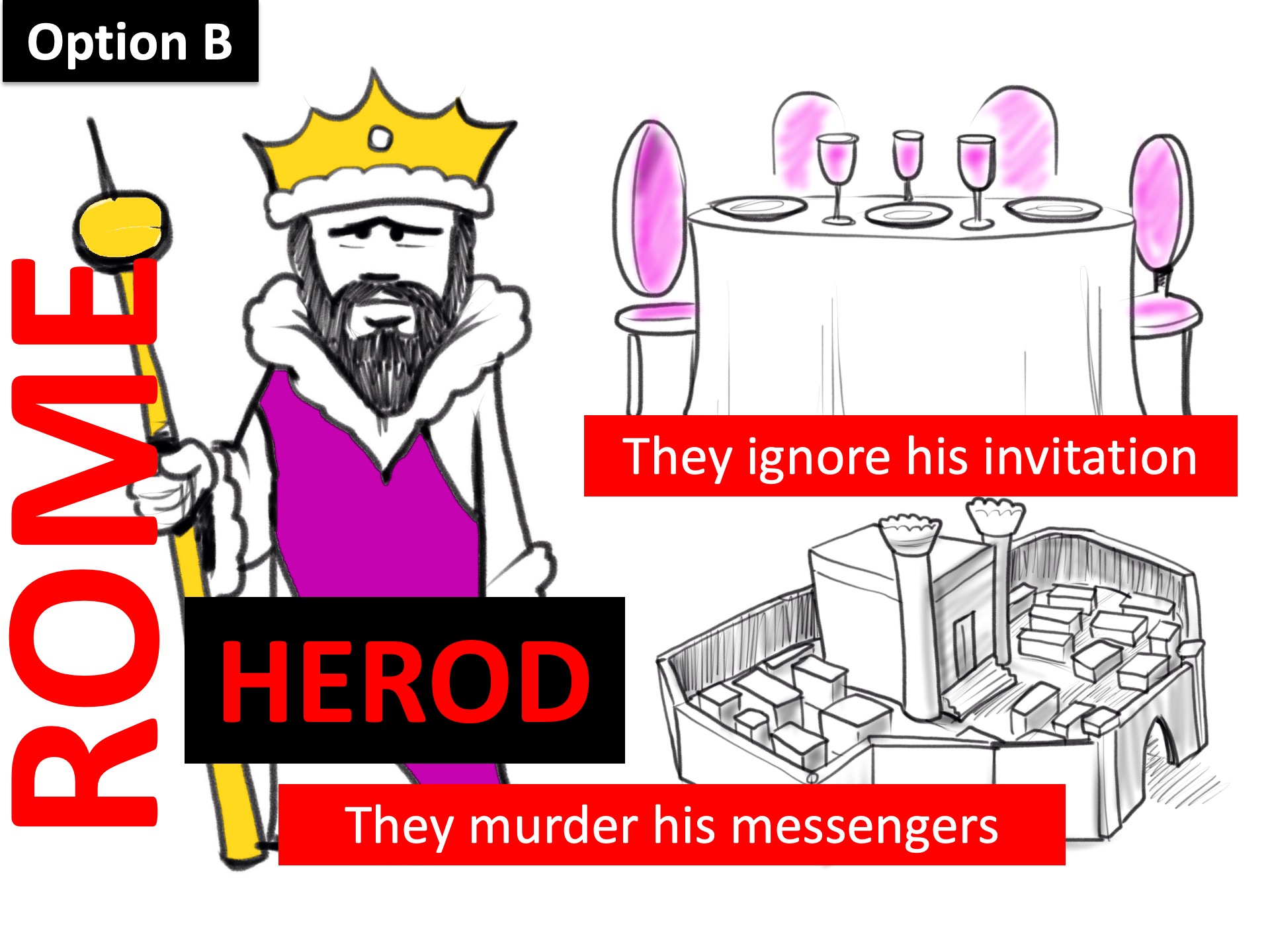
This enraged Herod. He went off, married the woman, then returned with the Roman army and burned down the city of Jerusalem.
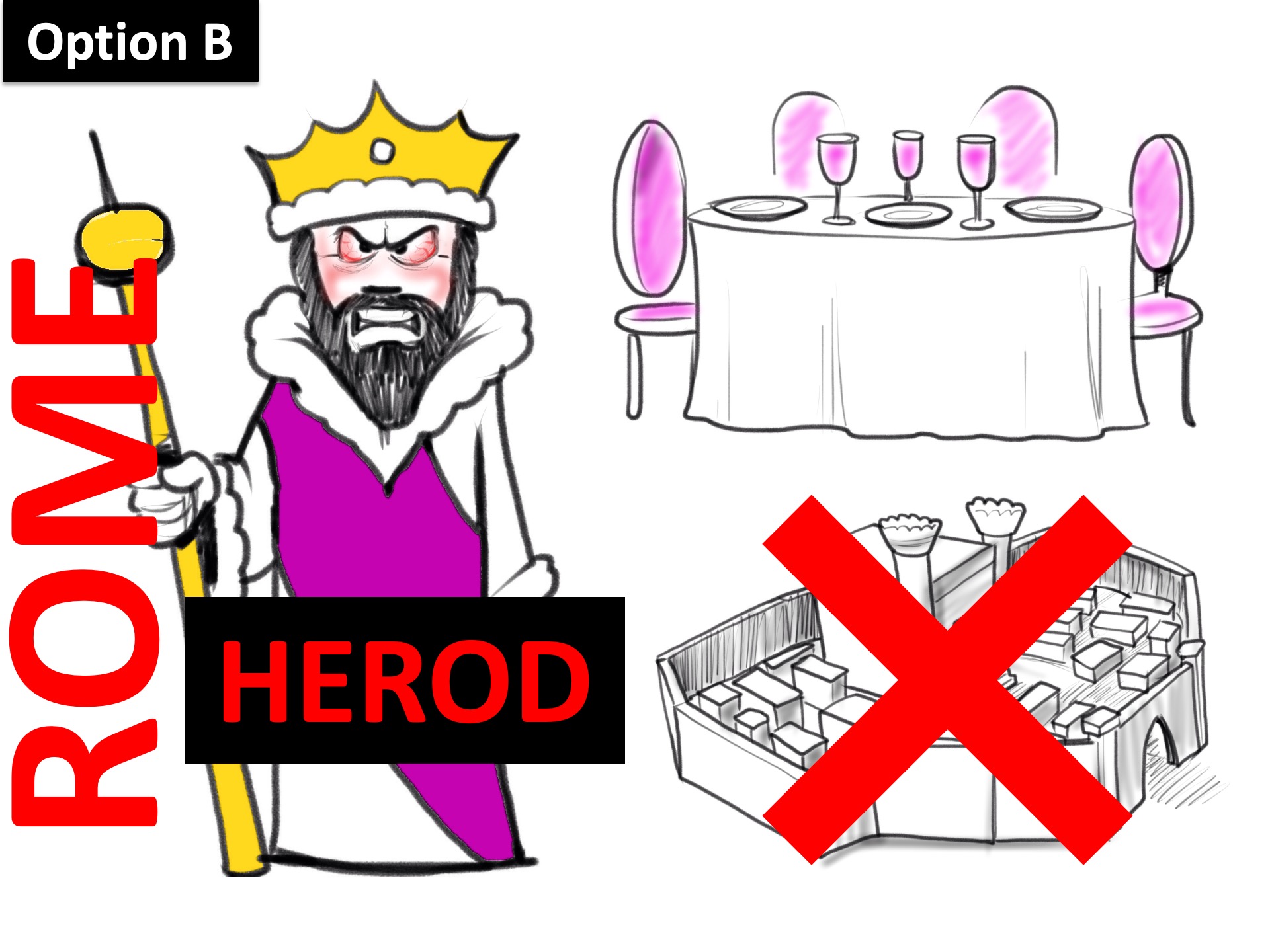
He took it over by force and demanded that the people accept him as the king. The were coerced into coming to the banquet. Herod then took over the temple, and started rebuilding the city under his rule.
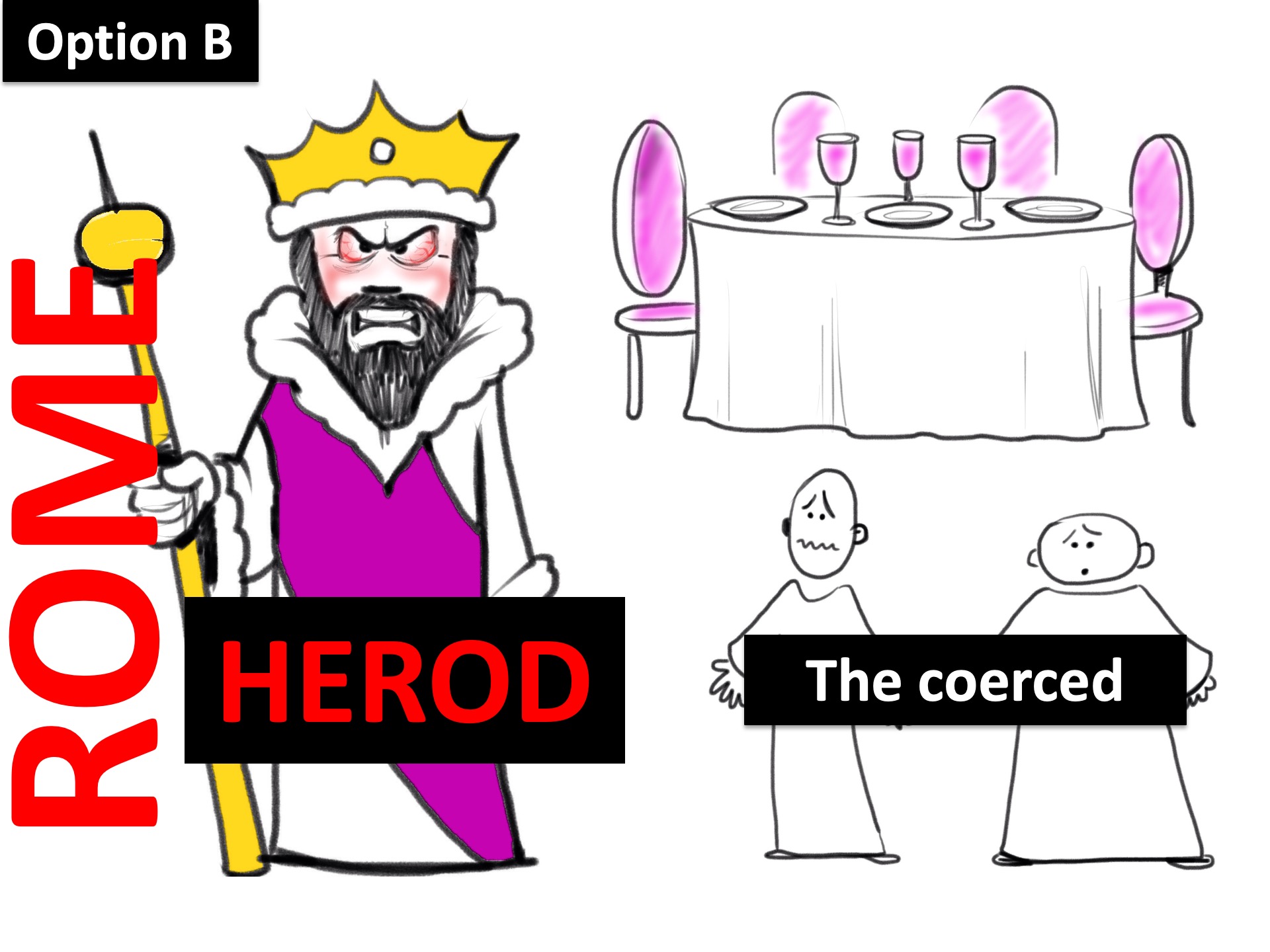
Only one man stood up against him. Antigonus. He would not “put on the wedding clothes.”
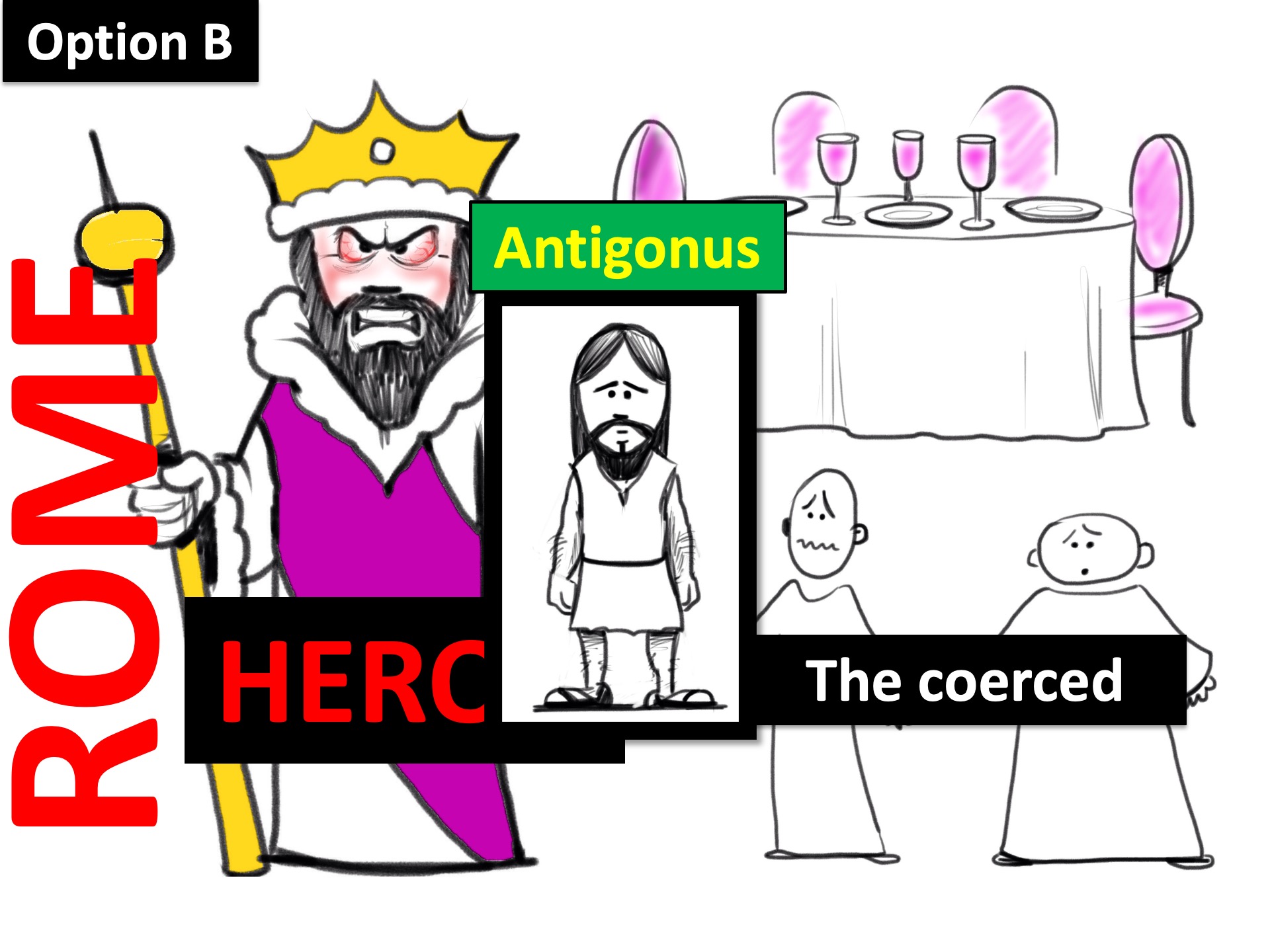
Herod had him bound, hand and foot, humiliated in front of the city, and executed.
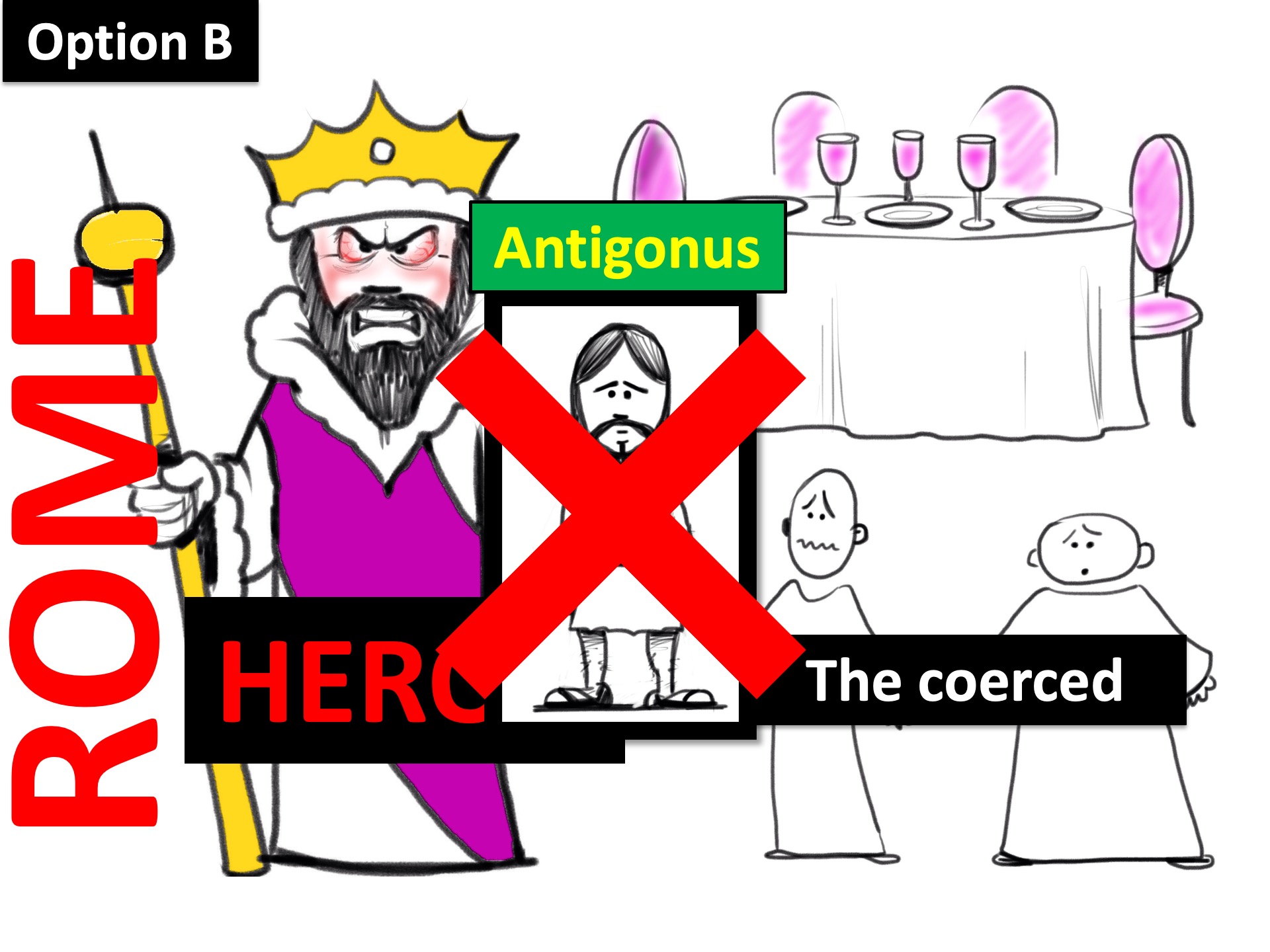
According to this interpretation, Jesus is identifying himself with Antigonus. And, more importantly, he is identifying himself as the suffering servant from Isaiah
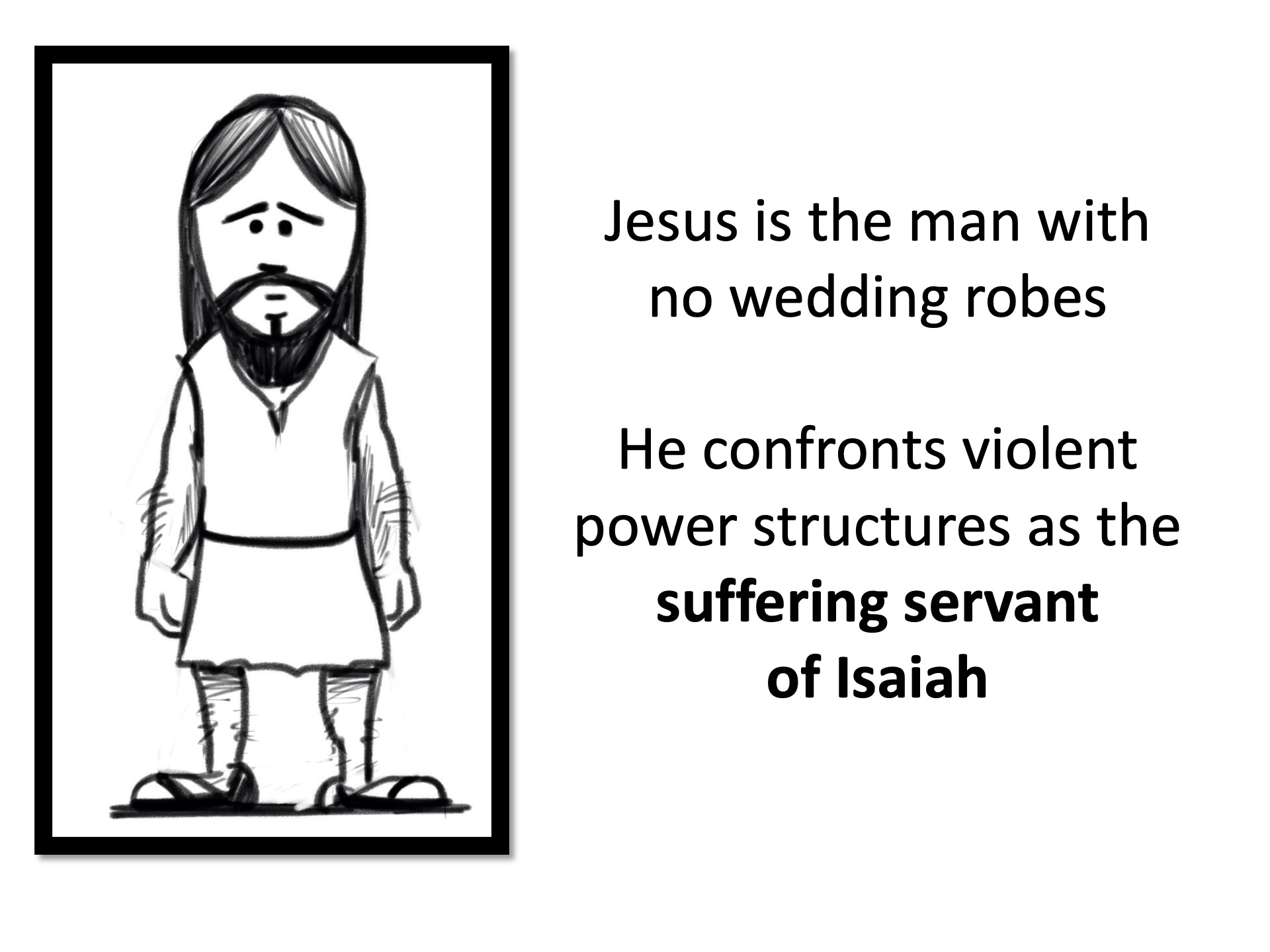
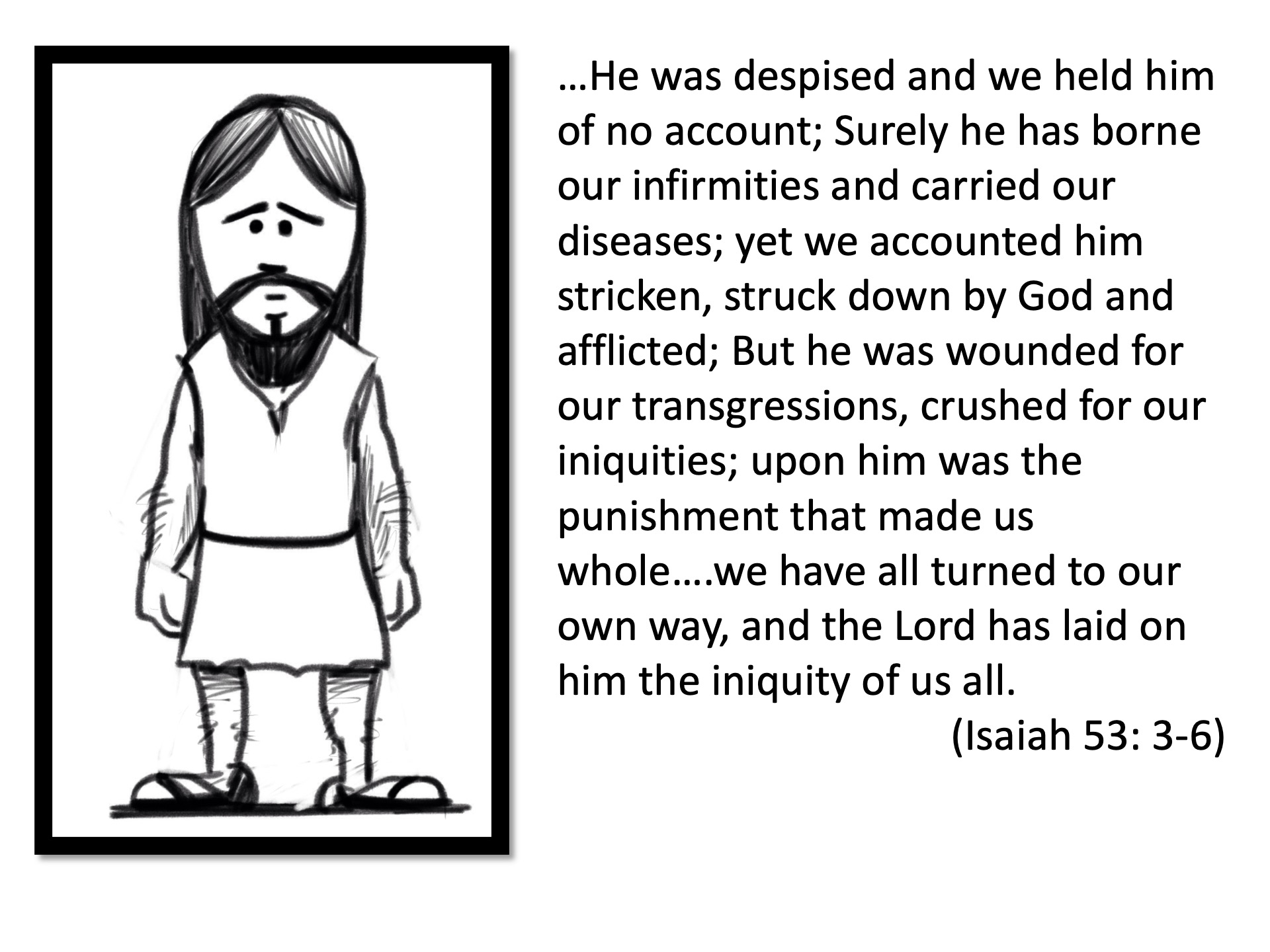
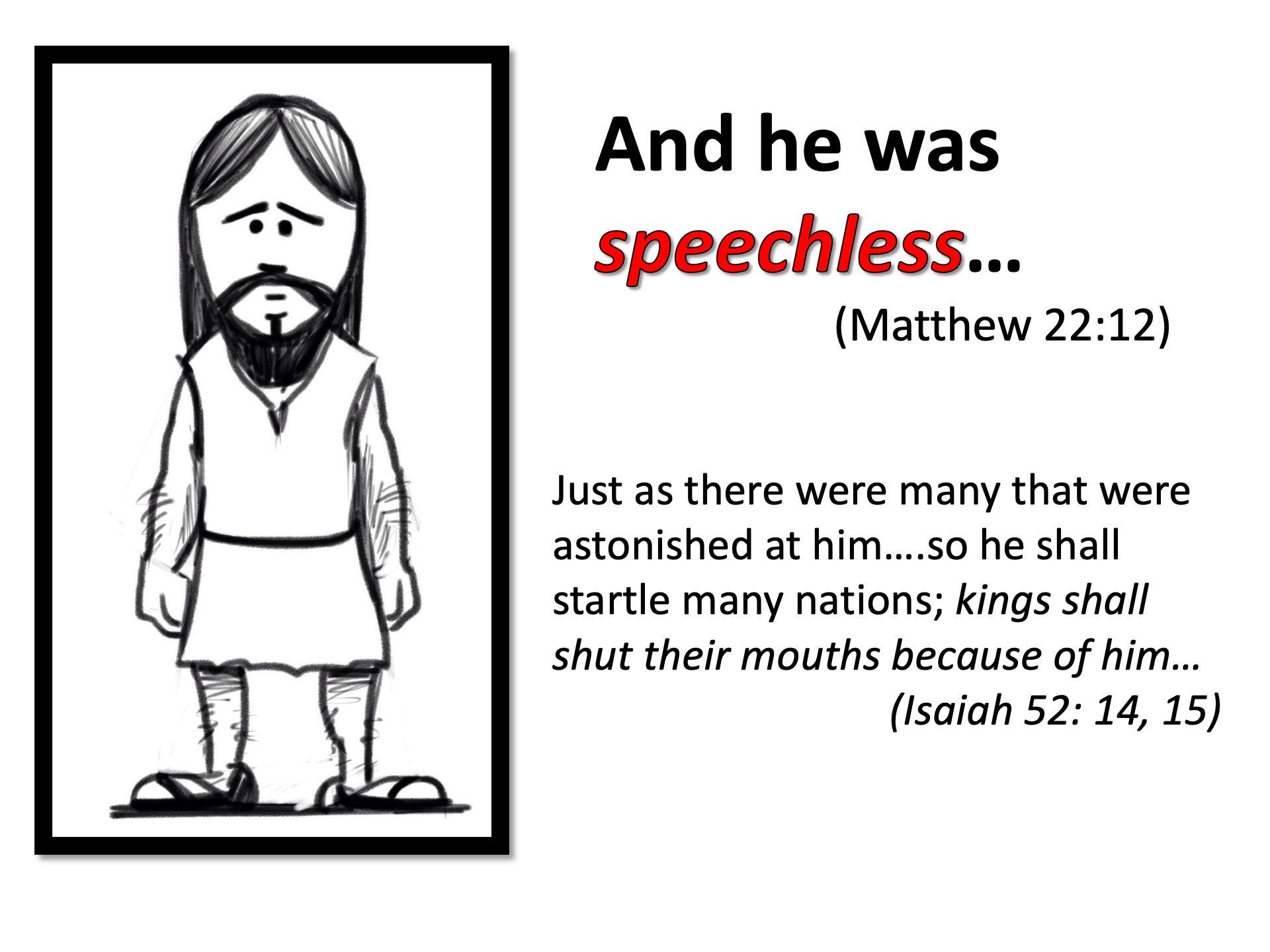
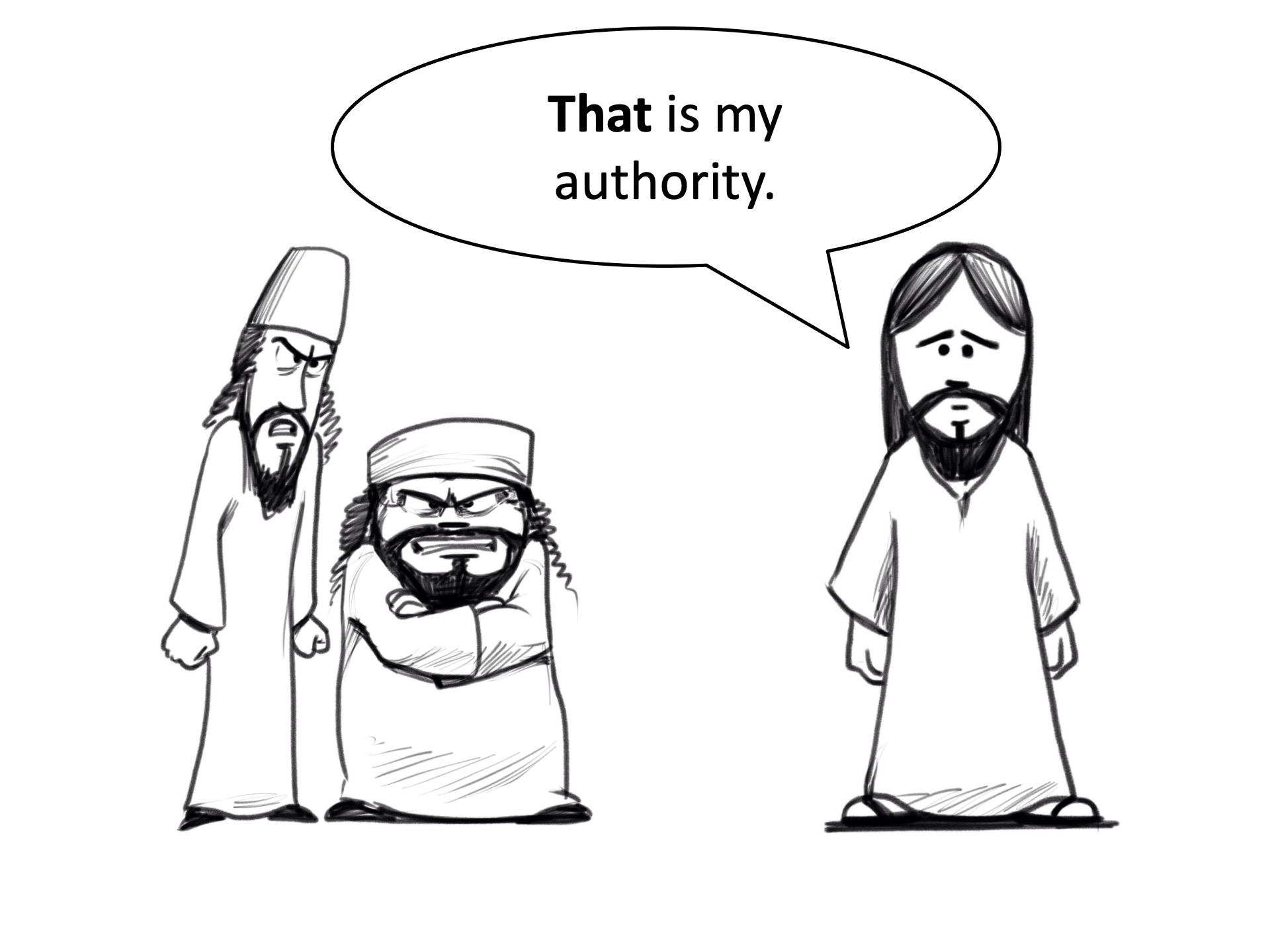
The leaders asked Jesus, “By what authority do you do these things?”
Jesus points out that the way people usually run kingdoms is through power plays, violence, and fear.
Jesus takes that system and turns it upside down. He takes all the violence of the system; all the sin, and fear, and hatred; and he takes it upon himself.
He allows himself to be crushed. He is thrown out into utter darkness, where there is weeping and gnashing of teeth.
So What?
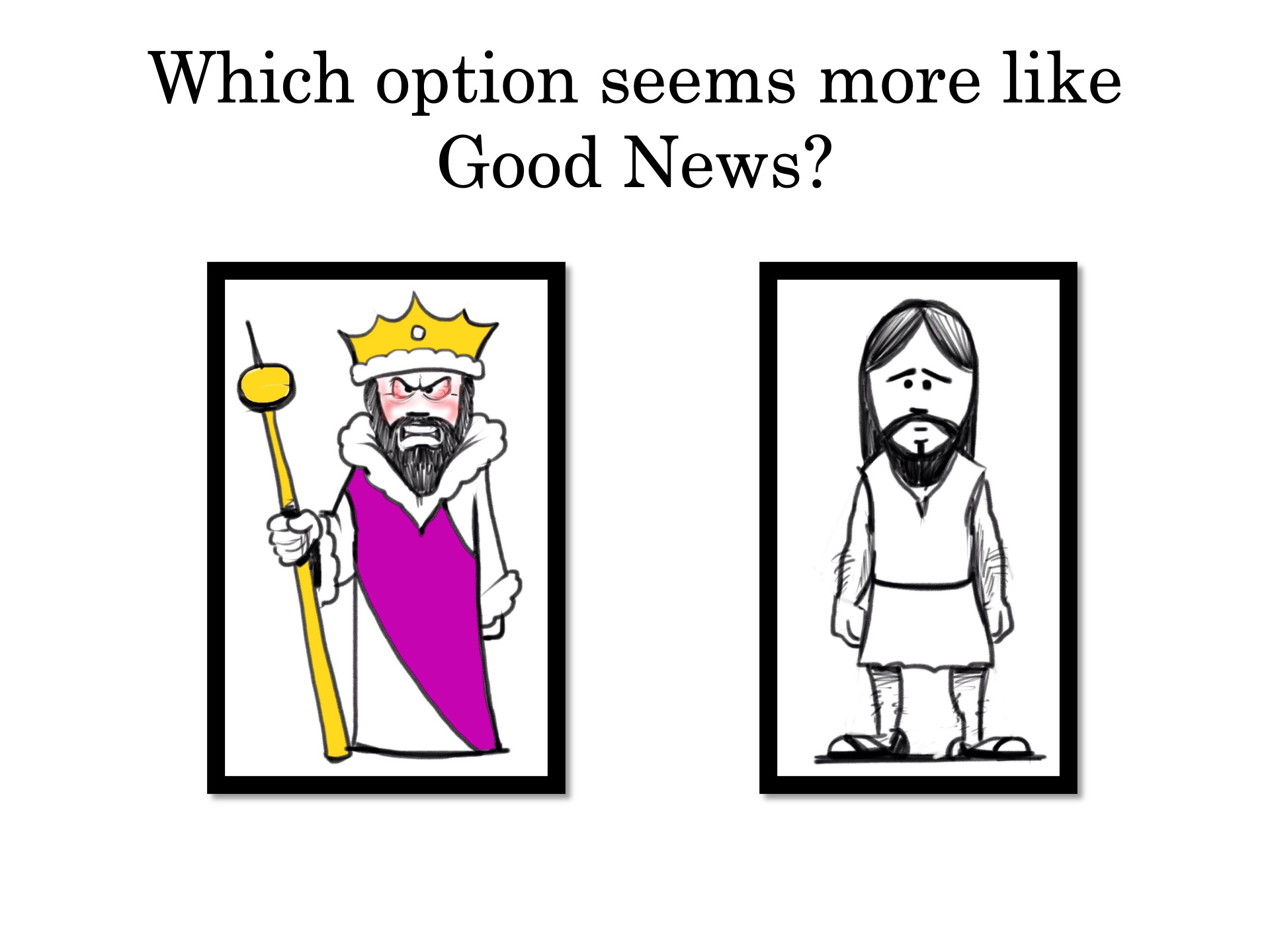
So, which interpretation aligns most with the Good News that Jesus has been preaching all along? The bottom line of both interpretations is actually the same.
You are invited to the Kingdom of Heaven.
No matter how you slice it, the way to the kingdom is to follow the way of Jesus. His way led him to the cross, where he laid down his life for us. When we realize that the world is upside down, and we have to die to its lust for power, its violence, and its hatred, then we can be ready to live the new life that Jesus gives.
This is a PowerPoint that I created in 2015 when I created the images above for a sermon. Enjoy!
[slideshare id=45664013&doc=youreinvitedsermonslides-150310104527-conversion-gate01&w=800]
Explore Every Book of the Bible
Find cartoons, illustrations, videos, commentaries, and other helpful information about every book of the Bible.


Thanks!
Do you know the Mohlises – Van, Sharon, Emily, and Abby?
Yes I do! Love that family.
Fantastic way of working through this parable, Steve! I am curious what sources you found helpful in considering “option B”. I really appreciate the way this option takes seriously the change in the way Matthew introduces this third parable as a “comparison” rather than “the kingdom of God is like”. It may also be worth noting that that the only time the Herodians are mentioned in Matthew’s Gospel is in response to this parable.
This is a very good comparison of two interpretations. After hearing the 2nd or option B, I may lean that way because of the historical context and the alignment with the person of Christ. Great stuff!!
Yes!!! Excellent scholarship into the historical context. This makes so much sense – Herod’s wedding into the Hasmonean line and claiming of the throne, Antigonus’ resistance and murder was recent history, fueling Jewish minds.
R. Mark Davis, Presbyterian Pastor who offers translations from the Greek for the weekly gospel lessons (https://leftbehindandlovingit.blogspot.com/), questions the attempt to make this into an allegory, and comments that it looks like Jesus is posting a warning about the usual image of the kingdom of heaven:
“I think it is important to notice the passive form of Ὡμοιώθηἡ (was likened). (It is also in the aorist or simple past tense.) Perhaps this is an idiomatic way of saying, “The kingdom of heaven is like,” where it takes the force of an active voice. But, to keep the passive force would render this “The kingdom of the heavens has been likened to…” which could be a set-up for a wrong way of thinking about God’s reign that needs correction.”
Your interpretation “B” shows Herod was the horrible king, not that God is a horrible king.
And remember, Jesus must have been saying some very upsetting things to get the religious and authorities riled up enough to arrest him and crucify him.
Thanks, Steve!
Thank you for the feedback and additional resources. It is a fascinating text.