

The Triune God has a mission (missio Dei) to restore and recreate all things according to God’s original and ongoing vision of peace and wholeness…
…and that mission has a church.
The big question in the Missional Church conversation is, “What is the Church, and how does it understand its purpose in the rapidly changing cultural context of the twenty-first century?”
It is a theological shift from missions to missional.

This page contains my research and resources for understanding and leading The Missional Church. Keep scrolling to explore…
What is The Missional Church?
The missional imagination is an understanding that the Triune God has a mission (missio Dei) to restore and recreate all things according to God’s original and ongoing vision of peace and wholeness. The conversation in the West around missiology and ecclesiology has seen a dramatic shift in the past one hundred years. The eighteenth and nineteenth centuries were dominated by a Christendom model in which the church sent missionaries into the world to convert heathen nations to Christianity, thus colonizing the world into Western European culture and propagating oppression and marginalization of non-European people and cultures in the name of Jesus. A missional ecclesiology recognizes the Eurocentric and devastating effects the Christendom model of missions and ecclesiology has had on the world and strives to reimagine the nature of the church as missional at its core.
It recognizes the polycentric and pluriform nature of the Holy Spirit at work in the world. The church, within this perspective, is the congregation of those who are both gathered around the risen body of Jesus and sent into the world to find and proclaim the reign of God in and among all cultures as the church forms an interdependent relationship with all nations. This missional activity is not uni-directional, moving from one central place where God is located and correctly understood to another place where God is completely absent. Rather, it is a polycentric, pluriform, multi-directional movement of God at work in all cultures, in diverse ways, bringing all cultures into generative conversation, in order to bring about peace and unity through the particular incarnation of the risen Jesus of Nazareth and the various incarnations of the Spirit within diverse cultures.
The Missional Church–aka Missional Ecclesiology–is a theological framework that is constructed around two big areas of theological conversation. The first is the Trinity, the second is the shift in the West from modernity to late/post modern philosophy. Click the boxes below to do a deep dive.
The Trinity
The Missional Imagination is built around the idea that God is the relationship of the three persons of the Trinty. The theological term is the relationality of God and the core concept is that all of life springs forth from the Trinune God and exists in interconnected interdependence.
Post-Foundational Frame
Western Society has experienced a massive shift throughout the twentieth century from modernity and the notion that knowledge is build on a foundation of rational, epirical science, to a post-foundational recognition that knowledge is socially constructed and relative to context. This has a huge impact on how the church understands it place in society.
A Visual Guide to the Missional Church
I created the Prezi below in 2013 to serve as a visual map to help me study for my comprehensive exams for my PhD at Luther Seminary. It covers some key books that shaped the missional conversation, a timeline of Christian Missiology, an extensive timeline of the international mission organization meetings, and all my class notes from Dr. Craig Van Gelder. Enjoy!
Missional Church Posts
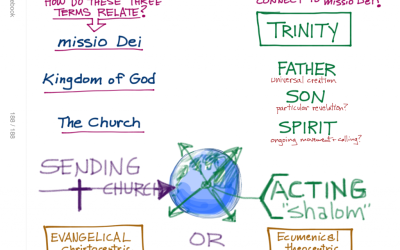
Article | Missio Dei – Understandings and Misunderstandings by Tormod Engelsviken
Engelsviken, T. "Missio Dei: The Understanding and Misunderstanding of a Theological Concept in European Churches and Missiology." International Review of Mission 92, no. 367 (2003): 481-497. Missio Dei- The Understanding and Misunderstanding - E. Engelsviken - my...
Book | Faith as a Way of Life by Christian Scharen
Scharen, Christian Batalden. Faith as a Way of Life: A Vision for Pastoral Leadership. Grand Rapids, MI: William B. Eerdmans Pub. Co., 2008. The Author Christian Scharen is assistant professor at Luther Seminary, St. Paul, MN., His main research and teaching interests...
Book | Translating the Message by Lamin Sanneh
Sanneh, Lamin O. Translating the Message: The Missionary Impact on Culture. 2nd ed. American Society of Missiology Series.Maryknoll, NY: Orbis Books, 2009. The Author Lamin Sanneh is the D. Willis James Professor of Missions & World Christianity at Yale...
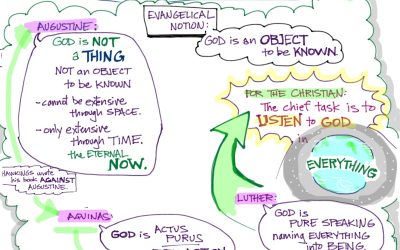
Listening to God in Everything | A Response to Lamin Sanneh’s Translating the Message
I am currently reading Translating the Message by Lamin Sanneh. His thesis is that translation is the process of entering the vernacular and allowing the Gospel to find its own voice within the host culture. It is a helpful revisioning of the standard polemic against...
Book | Welcoming the Stranger by Patrick Keifert
Welcoming the Stranger: A Public Theology of Worship and Evangelism. Minneapolis: Fortress Press, 1992. The Author Patrick Keifert is Professor of Systematic Theology at Luther Seminary, St. Paul, Minnesota. He has also been an adjunct professor at the School of Law,...
Book | Congregation and Community by Nancy Ammerman
Ammerman, Nancy Tatom, and Arthur Emery Farnsley. Congregation & Community. New Brunswick: Rutgers University Press, 1997. The Author Dr. Nancy Ammerman has spent much of the last decade studying American congregations. Her most recent book, Pillars of Faith:...
Book | We Are Here Now by Patrick Keifert
Keifert, Patrick R. We Are Here Now: A New Missional Era, a Missional Journey of Spiritual Discovery. Eagle, ID: Allelon Publishing, 2006. The Author Patrick Keifert is Professor of Systematic Theology at Luther Seminary, St. Paul, Minnesota. He has also been an...
Book | The Missional Church in Perspective by Van Gelder and Zscheile
Van Gelder, Craig, and Dwight J. Zscheile. The Missional Church in Perspective: Mapping Trends and Shaping the Conversation The Missional Network. Grand Rapids, MI: Baker Academic, 2011. The Authors Craig Van Gelder “At age 15, Craig Van Gelder made a personal...
Book | Christopraxis by Edmund Arens
Arens, Edmund. Christopraxis: A Theology of Action. 1st Fortress Press ed. Minneapolis: Fortress Press, 1995. The Author Edmund Arens is a catholic theologian and professor of Fundamental Theology at the University of Luzern, Switzerland. Fundamental Theology is “a...
Book | To Understand God Truly by David Kelsey
Kelsey, David H. To Understand God Truly: What's Theological About a Theological School. 1st ed. Louisville, KY: Westminster/John Knox Press, 1992. An Appreciative Response to David Kelsey’s book To Understand God Truly | by Steve Thomason | A Term Paper Presented to...
Book Reviews of the Missional Church
The following list contains visual reviews of books that deal with the Missional Church.
Reveal the List
- The End of Theological Education by Ted Smith | A Visual Book Review
- Reading Reading While Black While White
- Elizabeth Johnson and The Strength of Her Witness | Notes from the Ministerium
- Book | The Mission Table: Renewing Congregation & Community by Stephen P. Bouman
- Book Review | The Agile Church: Spirit-Led Innovation in an Uncertain Age by Dwight Zscheile
- Book | The Gospel in a Pluralist Society by Lesslie Newbigin
- Book | Foolishness to the Greeks by Lesslie Newbigin
- Book | Christianity After Religion by Diana Butler Bass
- Book | Missional Map-Making by Alan Roxburgh
- Book | Testing the Spirits edited by Patrick Keifert
- Book | Critical Social Theory by Gary Simpson
- Book | The Witness of God by John G. Flett
- Article | Missio Dei – Understandings and Misunderstandings by Tormod Engelsviken
- Book | Faith as a Way of Life by Christian Scharen
- Book | Welcoming the Stranger by Patrick Keifert
- Book | Congregation and Community by Nancy Ammerman
- Book | We Are Here Now by Patrick Keifert
- Book | The Missional Church in Perspective by Van Gelder and Zscheile
- Book | To Understand God Truly by David Kelsey
- Book | Constants in Context by Bevans and Schroeder
- Book | The Church between Gospel and Culture edited by George R. Hunsberger and Craig Van Gelder
- Book | The Ministry of the Missional Church by Craig Van Gelder
- Book | The Essence of the Church by Craig Van Gelder
- Book | Transforming Mission by David Bosch
- Book | The Open Secret by Lesslie Newbigin